SAME DAY ESTIMATES AVAILABLE
CALL FOR A FREE ESTIMATE
(440) 457-7064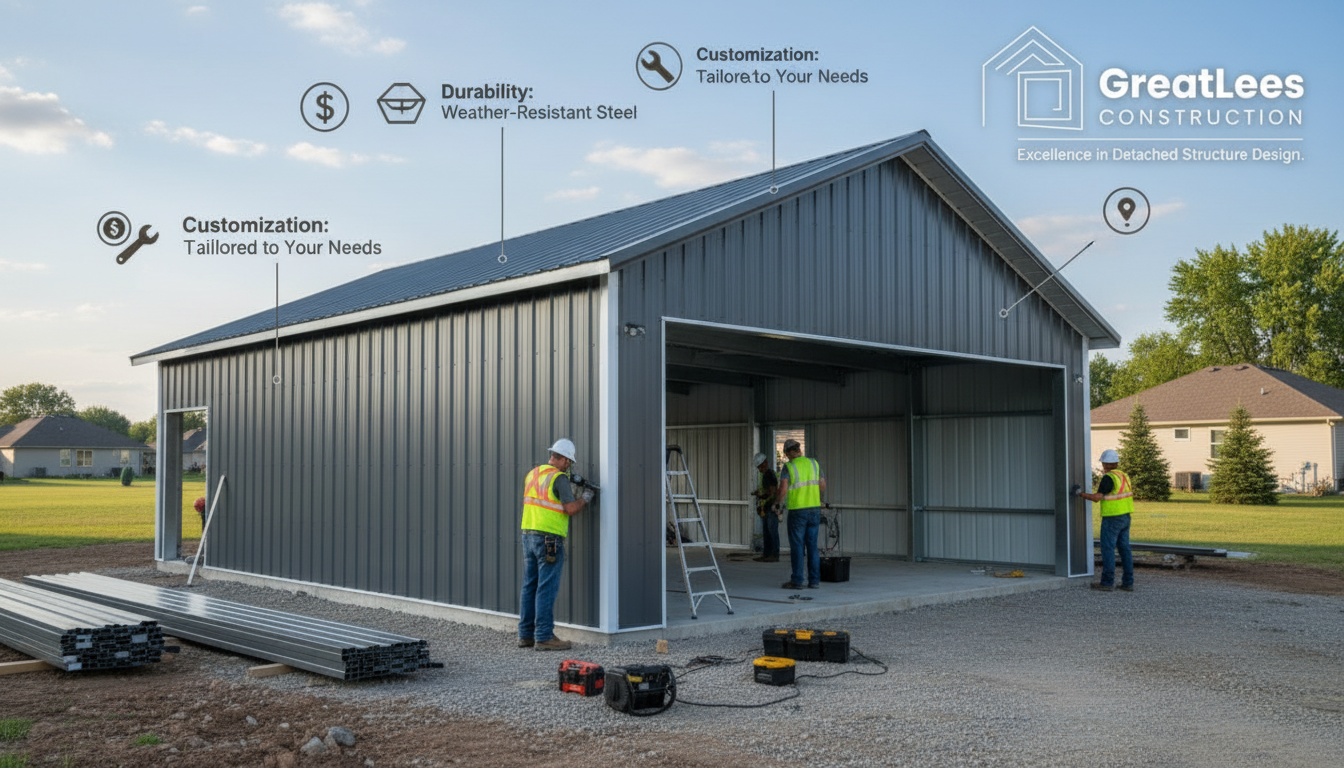
May 5, 2026
Building a custom garage is a strategic investment that transforms your property’s functionality and long-term market appeal. Unlike generic kits, a custom-built structure is engineered to withstand local climate challenges, from heavy lake-effect snow to intense summer humidity. Every detached metal garage requires a balance of aesthetic integration and high-spec structural integrity to truly serve as a permanent extension of your home.
Selecting custom garage builders who understand Ohio’s specific building codes ensures your project remains compliant while maximizing every square foot of available space.The process begins with a clear vision of your storage requirements and the architectural style of your primary residence.
Using a 3D garage designer allows homeowners to visualize the final product, ensuring that custom garage door placement and roof pitches align perfectly with existing structures. Beyond simple vehicle storage, these buildings often evolve into luxury workshop buildings that provide a climate-controlled environment for hobbies or business. A well-executed build focuses on durability, utilizing 12-gauge steel framing to provide the necessary strength for a lifetime of reliable use.
A custom-built garage is a bespoke structural solution designed from the ground up to meet a homeowner’s exact spatial and functional specifications. Unlike mass-produced prefabricated units, these structures allow for total control over materials, such as choosing 26-gauge steel sheeting for superior exterior protection. The design phase often incorporates specialized features like vertical-roof style garages, which are essential for shedding snow and debris efficiently.
Professional custom garage builders focus on creating a seamless workflow, ensuring the on-site installation is precise and the foundation is poured correctly. This level of customization also extends to entry points, where roll-up style doors and strategically placed walk-in doors and windows optimize both access and natural lighting. Ultimately, these buildings are high-performance assets tailored to the unique footprint of your property.
Custom-built garages are engineered to exceed basic square footage, providing a structure tailored to the specific environmental and functional rigors of your property. By selecting a detached metal garage, you can specify high-grade components like 12-gauge steel framing and 26-gauge steel sheeting, ensuring the building withstands extreme snow loads and heavy wind gusts.
These premium structures offer a level of versatility that standard kits lack, allowing for a sophisticated multi-car layout that functions as both a secure vehicle bay and a high-end luxury workshop.
The total investment for a custom metal building varies based on material quality, local labor rates, and the complexity of the site preparation. Homeowners must prioritize concrete curing time, as a solid foundation is non-negotiable for supporting heavy steel frames and machinery.
While prefabricated metal garages offer a lower entry point, a fully custom build involves higher costs due to specialized features like woven fiberglass insulation and premium finishes. Accurate budgeting must also include the permit application process, which varies by local jurisdiction but is essential for avoiding future legal or insurance complications.
The foundation represents the most critical cost factor, as it must be perfectly leveled and poured to support the specific weight of a custom metal building. You must allow at least seven to ten days for the concrete curing time before anchoring the heavy 12-gauge steel framing.
Proper drainage and professional soil compaction are mandatory to prevent the slab from cracking during extreme freeze-thaw cycles. Ignoring these preparation steps will inevitably lead to structural failure, regardless of the quality of the steel sheeting used.
Selecting 26-gauge steel sheeting over thinner alternatives increases the initial price but drastically reduces long-term maintenance costs. Similarly, opting for a vertical roof style is a more expensive upgrade than a regular roof, but it serves as a functional necessity for regions facing heavy snowfall and debris accumulation.
The inclusion of woven fiberglass insulation adds to the upfront cost but pays for itself through energy savings and superior interior comfort. Investing in higher-grade materials ensures your multi-car garage design remains a high-end structure rather than a basic shelter.
The number and type of entry points, such as high-clearance roll-up style doors, will directly impact your final budget. Custom garage door placement allows for better traffic flow but requires additional structural headers and framing, which adds to the labor.
Adding walk-in doors and windows improves ventilation and usability as a luxury workshop building, though it increases the complexity of the shell. These aesthetic and functional choices are what separate a standard storage unit from a high-value custom garage build.
Selecting the right partner for your project is the difference between a lifetime asset and a structural headache. You need custom garage builders who don’t just sell kits but offer comprehensive engineering tailored to the specific demands of your landscape. A reputable builder will provide a transparent breakdown of the custom metal building cost, including variables like local labor and heavy equipment fees.
Always verify that they are experienced with the permit application process in your specific jurisdiction to ensure the build is legal and insured. Furthermore, look for a contractor who utilizes a 3D garage designer, allowing you to finalize the custom garage door placement before the first bolt is tightened.
The journey to a high-performance detached metal garage follows a strict timeline to ensure structural integrity and long-term durability. Once the design is finalized, site preparation begins with a professionally poured slab, followed by the mandatory concrete curing time to prevent future shifting or cracking.
After the foundation is set, on-site installation commences with the erection of the 12-gauge steel framing, which provides the skeleton for your building’s strength.Next, the exterior 26-gauge steel sheeting and your chosen vertical roof style garage components are secured to create a weather-tight shell. This systematic approach ensures that every component, from the frame to the windows, functions as a cohesive and reliable unit.
The process begins with a 3D garage designer tool to map out the exact footprint and height of the structure. This phase allows for the finalization of custom garage door placement and visualizes how the building integrates with the existing property layout.
Builders utilize these models to calculate the precise volume of 12-gauge steel framing required for the project. By identifying these technical details early, you eliminate the risk of costly modifications during the physical construction phase.
Before any steel arrives, you must navigate the local permit application process to ensure the build meets zoning and safety codes. Once approved, the ground is leveled and the foundation is poured to support the weight of a multi-car garage design.
You must respect the full concrete curing time to ensure the slab can handle the pressure of heavy vehicles without cracking. Proper site prep is the only way to guarantee that your metal carports or garages remain stable for decades.
The “bone” structure of your garage is built using high-strength 12-gauge steel framing for maximum resistance against heavy snow. After the frame is anchored, the 26-gauge steel sheeting is applied to the walls and roof to provide a durable exterior skin.
This stage also includes the installation of the vertical roof style garage system, which is superior for moisture runoff. Professional custom garage builders ensure every panel is aligned perfectly to prevent leaks during intense rain or wind.
Maintaining a detached metal garage is relatively simple but requires consistent attention to protect your investment and the resale value of your home. A proactive maintenance schedule prevents minor issues with the steel sheeting from turning into expensive structural repairs later. You should perform a full walkthrough every season to check for any shifts in the foundation or signs of moisture penetration.
Ensuring that your multi-car garage design remains in top condition also keeps your manufacturer’s warranties valid. These small steps guarantee that your luxury workshop buildings continue to perform at a high level regardless of the weather.
Modern homeowners are increasingly looking for features that blend industrial strength with residential luxury and smart technology. The rise of luxury workshop buildings has driven a trend toward high-performance materials like 12-gauge steel framing paired with sophisticated interior finishes.
People are moving away from basic storage toward multi-car garage design layouts that include dedicated hobby spaces and high-end security. Incorporating these trending features not only improves daily usability but also significantly boosts the resale value of home.
Modern builds are prioritizing climate control by utilizing advanced woven fiberglass insulation to create a year-round workspace. This trend is particularly popular for those building luxury workshop buildings who need to protect sensitive electronic tools from humidity.
Proper insulation also reduces the noise from heavy rain hitting the 26-gauge steel sheeting, making the interior much quieter. This feature is now considered a standard for high-end custom metal buildings in volatile climates.
Homeowners are now demanding smart connectivity for their roll-up style doors, allowing for remote operation via smartphone apps. This technology often includes integrated cameras and sensors that alert you if the garage is left open or if there is unauthorized entry.
When combined with strategically placed walk-in doors and windows, these smart systems provide total control over the building’s security. It is a top-tier upgrade that adds significant modern appeal to any detached metal garage project.
The vertical roof style garage has become the preferred choice for its sleek look and superior ability to handle debris and snow. This design trend allows for higher interior clearances, which is perfect for homeowners who want to install car lifts or store tall RVs.
It also complements the aesthetic of the primary residence better than traditional rounded or horizontal roof styles. This feature is a hallmark of custom garage builders who focus on both form and function.
The choice between a custom build and a pre-fabricated kit often determines whether your structure is a temporary fix or a permanent asset. While prefabricated metal garages offer a faster initial setup, they frequently lack the structural reinforcements like 12-gauge steel framing required for long-term stability in harsh climates.
A custom build allows you to dictate every specification, from the custom garage door placement to the specific grade of steel sheeting (26-gauge) used for the exterior. Homeowners who prioritize the resale value of home usually opt for custom solutions because they can be architecturally matched to the primary residence.
| Feature | Custom-Built Garages | Pre-Fabricated Kits |
| Framing Strength | Heavy-duty 12-gauge steel framing | Standard 14-gauge or lighter |
| Roof Style | Specialized vertical roof style garage | Usually horizontal or rounded |
| Insulation | High-grade woven fiberglass insulation | Minimal or no insulation options |
| Customization | Unlimited 3D garage designer options | Fixed sizes and standard layouts |
| Durability | Built for 30+ years of weather protection | May struggle with heavy snow/wind |
| Property Value | Significant boost to home equity | Minimal impact on property value |
| Doors/Windows | Flexible walk-in doors and windows | Pre-set, limited entry points |
Great Lees Construction has established itself as an industry leader by prioritizing high-spec engineering and transparent client communication. As premier custom garage builders, they guide homeowners through the entire project lifecycle, from the initial 3D garage designer phase to the final walkthrough.
Their team manages the complexities of the permit application process, ensuring that every structure is fully compliant with all regional building codes. By utilizing premium materials like 26-gauge steel sheeting, they deliver luxury workshop buildings that are as durable as they are aesthetically pleasing.
Great Lees Construction prioritizes a rock-solid foundation, ensuring that every project accounts for the necessary concrete curing time before assembly. Their engineers evaluate the soil and drainage of your property to prevent future shifting that could compromise the 12-gauge steel framing. This attention to detail during the site prep phase is what prevents foundation cracks and structural misalignment years down the road.
The team at Great Lees Construction never compromises on the building’s exterior, exclusively utilizing 26-gauge steel sheeting for maximum impact resistance. They specialize in the installation of the vertical roof style garage, which is recommended for its superior ability to shed heavy rain and snow. By integrating woven fiberglass insulation into the build, they ensure that the garage remains a functional, temperature-controlled environment.
Utilizing a professional 3D garage designer, Great Lees Construction helps you optimize your storage space optimization before construction begins. They offer expert advice on custom garage door placement to ensure that multi-car units have a natural flow and easy accessibility. Whether you need high-clearance roll-up style doors for an RV or extra walk-in doors and windows for a backyard office, their layouts are bespoke.
Ultimately, investing in a custom garage build is a multifaceted decision that balances immediate utility with long-term financial gain. By prioritizing high-spec materials like 12-gauge steel framing and 26-gauge steel sheeting, you ensure the structure survives the most aggressive weather patterns. These buildings transcend simple storage, offering the flexibility to create luxury workshop buildings or optimized multi-car garage designs tailored to a specific lifestyle.
The long-term resale value of home is heavily dictated by the quality of additional structures and their adherence to local building codes. A well-planned build that utilizes a 3D garage designer and respects the concrete curing time stands as a testament to quality craftsmanship and structural integrity. From the efficiency of woven fiberglass insulation to the convenience of roll-up style doors, every custom detail adds a layer of sophistication that mass-produced kits cannot replicate.
What would a 20×20 garage cost?
The cost for a 20×20 structure typically ranges from $10,000 to $25,000, depending heavily on whether you choose a basic detached metal garage or a fully finished unit. Factors such as the thickness of the 12-gauge steel framing and the inclusion of woven fiberglass insulation will significantly influence the final custom metal building cost.
What does a built-in garage mean?
A built-in garage is a storage space that is structurally integrated into the main footprint of the house, often located under a living area or sharing multiple interior walls. Unlike a detached metal garage, these units are part of the original home’s foundation and must adhere to strict fire-rated drywall and ventilation codes.
What is a custom garage?
A custom garage is a bespoke structure designed using a 3D garage designer to meet a homeowner’s specific dimensions, aesthetic preferences, and functional needs. This approach allows for specialized upgrades like 26-gauge steel sheeting, unique custom garage door placement, and layouts optimized for luxury workshop buildings.
Is it cheaper to buy or build a garage?
Buying a basic prefabricated metal garage is generally cheaper upfront due to mass-production savings and faster on-site installation times. However, building a custom unit often provides better long-term value and a higher resale value of home because it utilizes more durable materials like 12-gauge steel framing.
What are common garage building mistakes?
One of the most frequent errors is rushing the concrete curing time, which leads to slab cracking and structural instability under the weight of the steel. Additionally, many homeowners fail to account for the permit application process or choose inadequate weather protection, resulting in legal issues and moisture damage.

Veteran Owned & Operated Since 2017
4.1 Average Rating (31 Reviews)
17601 W 130th St Suite #4
North Royalton, OH 44133
Monday - Friday: 8:00 AM - 5:00PM