SAME DAY ESTIMATES AVAILABLE
CALL FOR A FREE ESTIMATE
(440) 457-7064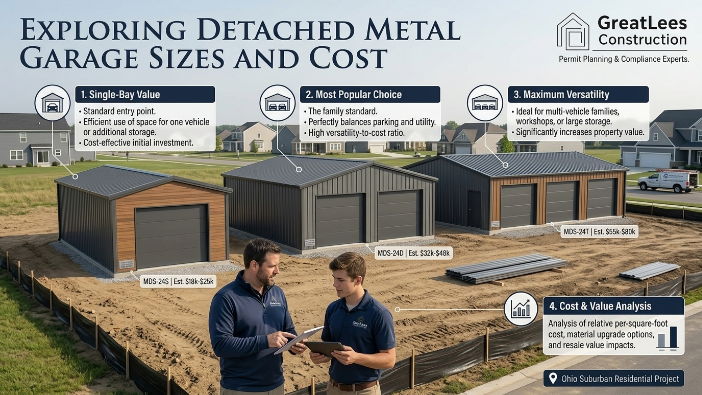
May 5, 2026
Settling for a generic garage size is the fastest way to turn a major property investment into a functional nightmare. Whether you are eyeing a 12×20 single-car garage for basic utility or a massive 30×40 triple-car garage for a growing fleet, you must look beyond the immediate footprint to avoid common mistakes in garage layout design. Most homeowners fail to account for the “true” clearance required, realizing too late that their steel building shell installed lacks the necessary metal building eave height for high-profile vehicles.
A high-authority build demands a calculated approach to metal garage pricing, where every square foot is optimized for both current needs and future market resale value. The structural integrity of your garage is not a place for budget-cutting fluff; it requires a rigid adherence to garage slab specifications and environmental resilience.
Neglecting a concrete vapor retarder or dismissing the importance of wind and snow load certification can lead to catastrophic structural failure or rapid depreciation of your assets. High-intent buyers and smart builders prioritize vertical roof style vs horizontal layouts to ensure the building handles local weather extremes without compromising the interior workspace. This isn’t just about parking a car—it’s about engineering a custom metal building that functions as a high-clearance, secure, and long-term asset for your property.
A triple-car structure is a high-yield asset that significantly boosts resale potential by appealing to buyers with multiple vehicles or hobby requirements. Real estate data consistently shows that custom metal buildings with three bays command a premium because they offer versatility that standard two-car units lack.
Beyond vehicle storage, these structures provide dedicated space for workshops or equipment, which prevents the “clutter creep” typical of smaller designs. When you invest in a 30×40 triple-car garage, you are effectively increasing the usable square footage of your property’s infrastructure. To maximize this value, ensure the unit features wind and snow load certification to prove its long-term durability to future appraisers.
Navigating metal garage pricing for a three-bay unit requires a deep dive into both dimensions and regional material costs. A standard 30×40 triple car garage offers roughly 1,200 square feet, providing ample room for three full-sized vehicles and additional perimeter storage.
Prices fluctuate based on the metal building height; taller buildings require more steel but allow for higher roll-up doors and overhead storage. You must also factor in the cost of a professional steel building shell installed, which ensures the frame is plumb and meets local structural codes.
The footprint of a three-car unit must be calculated based on the widest vehicle in your fleet to avoid tight squeezes. While a 30-foot width is common, extending to 36 or 40 feet allows for comfortable door clearance and side-wall shelving. Total square footage directly impacts the cost of metal garage projects, especially when adding high-clearance bays. Choosing the right garage dimensions guide helps you visualize the internal layout before the concrete is even poured.
Adding specialized features like a 10×10 garage door size for trucks will adjust your total budget, but is necessary for utility vehicles. Customizations such as walk-in doors, windows, and reinforced frames for wind and snow load certification are standard for high-end metal shops. These upgrades ensure that the building is not just a shell but a fully functional extension of your workspace. Always account for the building permit for garage fees, which vary by municipality and building size.
Determining the right size starts with your largest asset, typically a full-sized pickup or SUV that requires a 10×10 garage door size for trucks. A 12×20 single-car garage is often too shallow for long-bed trucks, making it vital to measure your vehicle’s full length, including hitches or bumpers. You must also evaluate your metal building eave height to ensure any planned car lifts or mezzanine storage have sufficient overhead clearance.
Integrating a concrete vapor retarder during the slab pour is a non-negotiable step to prevent rust on your tools and vehicle undercarriages. Finally, check your local zoning laws to secure a building permit for garage construction before finalizing any material orders.
Internal movement is often overlooked, leading to common mistakes in garage layout design like blocked pathways. You need at least three feet of clearance around each vehicle to ensure you can move equipment without risking paint damage. High-intent builds utilize roll-up doors to save ceiling space, allowing for better lighting or HVAC ductwork installation. Proper spacing is what separates a cramped storage unit from a professional-grade automotive shop.
Your geographic location dictates whether you need a standard build or one with wind and snow load certification. In regions with heavy winters, the vertical roof style vs horizontal choice is essential for shedding snow and preventing roof collapse. These structural reinforcements add to the cost of metal garage units but are required for safety and insurance compliance. Never compromise on the gauge of the steel or the spacing of the primary framing members.
Building for the vehicles you own today is a mistake; you should always build for the vehicles you might own tomorrow. A 24×24 double-car garage provides a safety net of extra space that a single-car unit simply cannot match. If your budget allows, a custom metal building with extra width or depth will always provide a higher return on investment. Scalability means ensuring your garage slab specifications can support the weight of heavier machinery if your hobbies evolve.
The decision ultimately hinges on your specific use case and the total cost of metal garage construction you are willing to absorb. A 12×20 single-car garage is perfect for basic vehicle protection or a small lawn equipment shed on a tight lot. However, the 24×24 double car garage remains the industry standard for most homeowners, providing the best balance of price and daily utility.
If you have the acreage and the budget, the 30×40 triple car garage offers unmatched versatility for a home business or a serious collection. Always prioritize custom metal buildings that meet your local wind and snow load certification to ensure the structure survives the elements.
Determining the ideal dimensions for your structure requires a meticulous analysis of your current inventory and long-term storage objectives. A standard 12×20 single-car garage serves as the baseline, but it often fails to accommodate modern, oversized SUVs without sacrificing maneuverability. You must prioritize the metal building eave height to ensure that overhead storage or specialized equipment fits comfortably within the vertical space.
Furthermore, the inclusion of a 10×10 garage door size for trucks is a critical requirement for owners of heavy-duty vehicles seeking seamless access. Finalizing your footprint based on a technical garage dimensions guide prevents the costly error of under-building for your property.
Establishing a minimum of three feet of clearance around the perimeter of each vehicle is a non-negotiable rule in high-end design. This spacing prevents the common mistakes in garage layout design where open doors strike the steel walls or adjacent parked cars.
By planning for wider bays, you facilitate a safer environment for loading groceries or performing routine maintenance tasks. High-intent builders always account for these “invisible” square feet before finalizing their custom metal buildings.
The choice between single wide doors or multiple smaller entries significantly dictates the flow and accessibility of your steel building shell installed. Large roll-up doors provide a cleaner aesthetic and broader access but may require reinforced headers to maintain structural integrity.
Conversely, separate doors offer better climate control by limiting the amount of air exchanged when one vehicle enters or exits. Each configuration must be cross-referenced with your specific metal garage pricing to ensure budget compliance.
Maximizing the metal building eave height allows you to utilize overhead space that would otherwise be wasted in a standard height structure. This extra room is ideal for installing heavy-duty shelving, mezzanine levels, or even automotive car lifts for multi-vehicle stacking.
Proper vertical planning ensures that your garage dimensions guide accounts for both floor-level utility and aerial storage capacity. Without this foresight, you limit the future scalability of your workspace and storage potential.
Selecting the right roof and frame style is a decision that impacts both the cost of metal garage projects and the building’s lifespan. The debate between vertical roof style vs horizontal is settled by your local climate; vertical roofs are superior for shedding debris and heavy snow loads. You must also ensure that the garage slab specifications are engineered to support the specific weight and pressure of the chosen building type.
Investing in a professionally installed steel building shell ensures that the framing is correctly aligned to prevent future leaks or structural warping. Ultimately, the best garage type is one that balances immediate budgetary constraints with the long-term durability of the structure.
A 12×20 single-car garage remains the most cost-effective solution for homeowners with limited lot space or basic storage needs. Moving up to a 24×24 double car garage offers significantly more versatility, allowing for two vehicles and a modest workbench area.
This mid-sized option is the most popular choice for balancing initial metal garage pricing with daily functional requirements. It provides the necessary footprint for most families while maintaining a manageable construction timeline and permit process.
For those with unique property layouts or specialized equipment, custom metal buildings offer a tailored approach that standard kits cannot match. Customization allows you to integrate specific features like offset doors, integrated workshops, or unconventional eave heights for oversized machinery.
While custom designs may slightly increase the cost of metal garage construction, they eliminate the inefficiencies of a one-size-fits-all model. This strategic investment ensures that every square inch of the building serves a pre-defined purpose for the owner.
Investing in a 30×40 triple-car garage is a decisive move toward total property utility and future-proofing your investment. This massive footprint eliminates the need for external storage units, keeping all your assets, tools, and seasonal gear under one secure roof. The additional width allows for a 10×10 garage door size for trucks alongside standard doors, providing specialized access for various vehicle types.
By prioritizing wind and snow load certification, you ensure that this large-scale structure remains a permanent and safe fixture on your land. The flexibility provided by three bays allows for a dedicated “dirty” workspace that remains separate from your clean vehicle parking.
A triple-bay layout provides the necessary breathing room to run a small home business or a complex automotive restoration hobby. The expansive floor plan allows for the permanent installation of heavy machinery without hindering the movement of daily drivers.
With the right building permit for garage usage, you can transform one-third of the structure into a fully conditioned office or studio. This adaptability is the primary reason why custom metal buildings of this size offer the highest long-term satisfaction.
Beyond vehicles, a three-car structure acts as a central hub for all household logistics and outdoor maintenance equipment. You can dedicate specific zones for lawn tractors, recreational vehicles, and seasonal decorations without creating a cluttered environment.
Utilizing a detailed garage dimensions guide helps you map out these zones to maintain clear walkways and easy access to high-use items. This level of organization is only possible when you move beyond the restricted space of a standard double-car unit.
The primary advantage of a three-car garage is the massive increase in both functional space and the resale value of your property. However, the disadvantage lies in the increased metal garage pricing and the more rigorous building permit requirements for garage construction for larger footprints. You must also account for the higher cost of the foundation, including the necessary concrete vapor retarder and reinforced garage slab specifications.
While the cost of metal garage construction is higher, the trade-off is a structure that offers unparalleled versatility for decades. Weighing these factors requires an honest assessment of your budget versus your need for professional-grade storage and workspace.
Homes with triple-car garages are increasingly sought after by buyers who value security for their vehicles and hobby equipment. This type of structure allows for a 10×10 garage door size for trucks, catering to a demographic that standard garages often exclude.
The sheer volume of a 30×40 triple-car garage makes it a standout feature in any real estate listing, often justifying the initial construction costs. It is a functional luxury that pays dividends through daily convenience and long-term equity growth.
The most significant hurdle for a three-car build is the logistical complexity and the initial financial outlay required. Larger buildings demand more extensive site preparation and a more robust steel building shell installed to meet safety codes.
You must also be prepared for higher utility costs if you plan to heat or cool such a large internal volume. Despite these challenges, most owners find that the benefits of having a certified, high-capacity custom metal building far outweigh the upfront logistical burdens.
Choosing between a single, double, or triple-unit structure is a strategic decision that dictates your property’s functional limits and future resale value. Prioritizing wind and snow load certification and a high-quality steel building shell installed ensures your investment withstands environmental pressures while securing your high-value assets. Whether you opt for a 12×20 single-car garage or a sprawling 30×40 triple-car garage, the key to long-term satisfaction lies in meticulous planning and high-authority technical specifications.
Ultimately, avoiding common mistakes in garage layout design requires a commitment to structural excellence, from garage slab specifications to the correct metal building eave height. Integrating a concrete vapor retarder and selecting a vertical roof style vs horizontal are the marks of a high-intent builder focused on durability and moisture control. Secure your building permit for garage construction in cleveland oh today and invest in a custom metal building that offers the clearance, safety, and versatility your lifestyle demands.
What is the minimum concrete thickness required for a metal garage slab?
Standard residential garage slabs should be at least 4 inches thick, though 6 inches is recommended if you plan to park heavy machinery or large trucks. This increased thickness, combined with proper reinforcement, prevents cracking under the significant point loads of industrial-grade equipment.
Can I install a metal garage on an existing asphalt driveway?
While possible, installing on asphalt is generally discouraged because the surface is too flexible to provide a stable, long-term anchor for a heavy steel building shell. A dedicated concrete pad adhering to strict garage slab specifications is the only way to ensure the structure remains level and secure against high winds.
How does a vertical roof style affect internal temperature and ventilation?
The vertical roof style facilitates better airflow through the ridge caps, which helps naturally regulate internal temperatures during extreme summer heat. This design also prevents moisture buildup better than horizontal panels, reducing the risk of condensation dripping onto your vehicles.
Do metal garages require grounding for lightning protection?
Yes, because metal is a conductor, your custom metal building must be properly grounded during the installation of the steel building shell to ensure safety during electrical storms. Local building codes often dictate specific grounding rod depths to protect both the structural integrity and any electrical systems inside.
Is it cheaper to buy a pre-fabricated garage kit or a custom-built unit?
Pre-fabricated kits often have a lower initial metal garage pricing, but they frequently lack the specific wind and snow load certification required for many regions. Custom units allow you to optimize the metal building eave height and door placements, which prevents expensive modifications after the delivery.

Veteran Owned & Operated Since 2017
4.1 Average Rating (31 Reviews)
17601 W 130th St Suite #4
North Royalton, OH 44133
Monday - Friday: 8:00 AM - 5:00PM