SAME DAY ESTIMATES AVAILABLE
CALL FOR A FREE ESTIMATE
(440) 457-7064March 13, 2026
A 3-car garage is designed to comfortably fit three vehicles while still providing enough space for movement, storage, and other practical uses. Many homeowners choose this size of garage because it offers flexibility for families with multiple cars or those who need extra room for tools and equipment. Understanding the dimensions of a three-car garage helps you plan construction, parking layout, and storage effectively.
When planning a garage, the size matters not only for parking vehicles but also for accessibility and organization. A well-designed 3-car garage size ensures that doors can open easily and there is enough clearance for walking around vehicles. In this guide, you will learn about typical dimensions, layout options, square footage, and factors that influence how big a three-car garage should be.
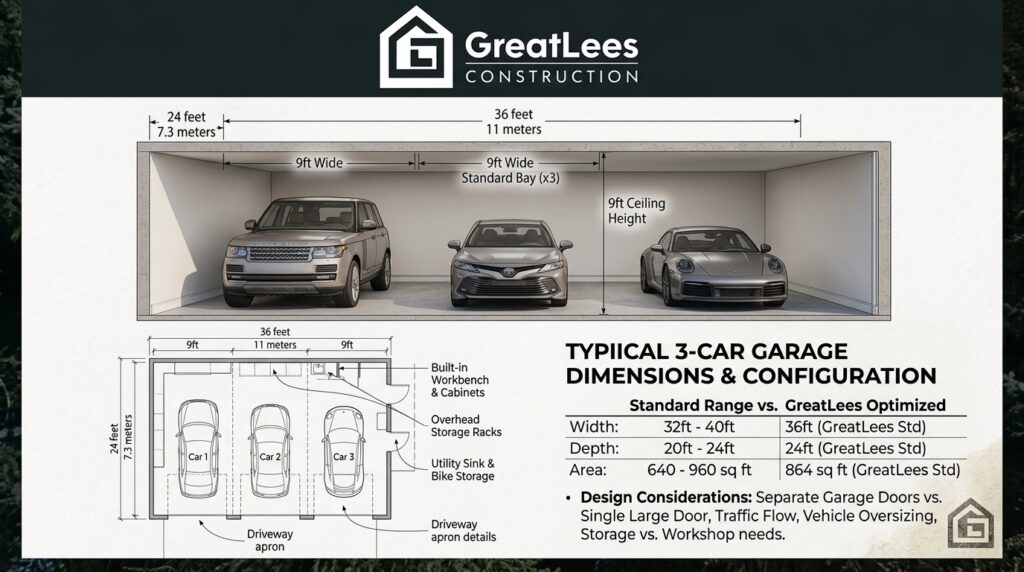
The standard size of a 3-car garage varies depending on the design and the size of the vehicles it needs to accommodate. In most residential homes, a typical three-car garage measures around 30 to 36 feet wide and 20 to 24 feet deep. This space allows three average vehicles to fit comfortably while leaving room for doors to open.
In terms of square footage, the average 3-car garage size ranges between 600 and 900 square feet. However, some modern homes include larger garages that extend beyond this range to allow additional storage or workspace. The actual dimensions may differ depending on local building codes, property size, and homeowner preferences.
A three-car garage typically provides between 600 and 900 square feet of usable space, depending on the exact dimensions. For example, a garage measuring 30 × 20 feet equals about 600 square feet, which is often considered the minimum size. Larger garages, such as 36 × 24 feet, can reach around 864 square feet, giving more room for movement and storage.
Square footage is important because it determines how comfortably vehicles will fit inside the garage. If the garage is too small, drivers may struggle to open doors or walk around parked cars. On the other hand, a larger garage creates extra space for shelves, cabinets, or work areas.
Homeowners often choose bigger designs if they plan to store bicycles, lawn equipment, or seasonal items. Increasing the square footage of a 3-car garage can significantly improve organization and usability. That is why many builders recommend planning a slightly larger layout whenever possible.
The dimensions of a 3-car garage can vary depending on the design layout and the available land 3-car. Some gs are built with three doors, while others include two doors with one larger opening. Each layout slightly changes the measurements and the way vehicles are parked.
A single-door layout usually m3-carone large garage door that allows vehicles to enter a shared space. This design often measures around 32 to 36 feet wide to allow enough room for three cars. The depth usually remains around 20 to 24 feet for comfortable parking.
This layout provides a clean exterior appearance and can be more affordable to build. However, drivers must be careful when parking to avoid blocking each other.
Many homes use a two-door design where one door covers two vehicles, and the other covers a single parking space. This design improves accessibility because each car has its own entry area. Typical widths range from 32 to 34 feet,t depending on the spacing between vehicles.
This layout balances convenience and aesthetics while maintaining efficient use of space. It is one of the most common choices for modern residential homes.
The three-door design gives every car its own garage door. This option increases convenience because each vehicle can enter or exit without affecting the others. The overall width is often 36 feet or more to allow proper spacing between the doors.
Although this design can be slightly more expensive, it offers the most flexibility for daily use. Many homeowners prefer it when building a large 3-car garage.
When designing a 3-car garage, it is important to understand how much space each vehicle requires. Most standard vehicles need about 9 to 10 feet of width and 18 to 20 feet of depth. This allows enough room to park safely and open the doors3-carper spacrevents damage to vehicles and improves accessibility. Without adequate clearance, drivers may struggle to exit their cars comfortably.
Several important factors determine the ideal size of a 3-car garage. Although the basic purpose of a garage is to park vehicles, homeowners often consider additional needs such as storage, workspace, and accessibility when deciding the dimensions. These requirements can significantly increase the space needed beyond the minimum measurements.
A well-planned 3 ca3-carage size should provide enough room for vehicles while still allowing comfortable movement around them. If the garage is too small, it can quickly become cramped and difficult to use for daily parking. For this reason, builders often design garages slightly larger than the minimum recommendations.
The size and type of vehicles being parked in the garage play a major role in determining the overall garage dimensions. Compact cars require less parking space, while larger vehicles such as SUVs, vans, and pickup trucks need additional width and depth. If a household owns multiple large vehicles, the garage must be designed with extra clearance to avoid tight parking conditions.
Many homeowners use their garage for more than simply parking cars. Items such as bicycles, lawn equipment, tools, and seasonal decorations often need storage space inside the garage. If storage systems like shelves or cabinets are added, the garage may need additional square footage.
Local construction rules and zoning regulations can influence how large a garage can be built on a property. Many cities have building codes that specify minimum setbacks, maximum building sizes, and structural requirements for garages. These regulations ensure safety and maintain consistent neighborhood design standards.
The available land space around a home also affects the final dimensions of a 3-car garage. Larger properties provide more flexibility for wider garages, while smaller lots may require compact designs or creative layouts. The garage must fit comfortably within the property without overcrowding other structures.
Homeowners often think about future needs when deciding how big their garage should be. Families may purchase additional vehicles later or require more storage space as their household grows. Planning for these possibilities can help prevent the need for expensive renovations later.
A 3-car garage often provides enough space for both vehicles and storage if it is designed properly. Many homeowners use the extra area to store tools, sports equipment, or seasonal decorations. Wall-mounted shelves and cabinets can help maximize available space.
However, the storage capacity depends on the overall size of the garage. A minimum-size garage may only accommodate vehicles with limited storage options. Larger garages offer greater flexibility for organizing items.
Planning storage during the design phase ensures that the garage remains functional and clutter-free. Many homeowners also add overhead racks to make use of unused ceiling space. With proper organization, a 3-car garage can serve multiple purposes effectively.
A 3-car garage is much larger than both single-car and two-car garages, providing significantly more space for vehicles and storage. While smaller garages are designed mainly for parking, a three-car garage offers additional flexibility for tools, equipment, and work areas. Because of this extra room, many homeowners prefer a 3-car garage size when building a new home or upgrading their property.
The comparison between different garage sizes highlights how much extra functionality a three-car garage provides. From increased parking capacity to improved property value, the difference becomes clear when evaluating the available space. Understanding these differences helps homeowners decide which garage size best suits their needs.
A single-car garage is typically the smallest type of residential garage and usually measures around 12 × 20 feet. This size is just enough for one vehicle and offers very limited extra room for storage or movement. Homeowners who only have one car may find it sufficient, but the space often becomes crowded when tools or equipment are added.
A two-car garage is the most common type found in many homes and generally measures around 20 × 20 feet. It allows two vehicles to be parked side by side, but the available storage space may be limited once both parking spots are occupied. Many homeowners find themselves using part of the garage for storage, which can reduce the available parking area.
One of the biggest advantages of a 3-car garage is the extra room it provides for comfortable parking. In smaller garages, drivers often need to park carefully to avoid hitting walls or nearby vehicles. Limited space can make it difficult to open car doors fully or move around the garage easily.
Storage capacity is another major difference between garage sizes. Single-car garages rarely provide enough room for extensive storage once a vehicle is parked. Two-car garages offer slightly more flexibility but can still become cluttered if many items are stored inside.
The size of a garage can influence the overall value and appeal of a property. Homes with only a single-car garage may not meet the needs of modern families who often own multiple vehicles. Even two-car garages can feel restrictive for households with additional drivers.
Yes, a 3-car garage can easily serve multiple purposes beyond parking vehicles. Many homeowners transform part of the space into a workshop, home gym, or hobby area. The extra square footage allows these activities without sacrificing parking space.
Some people also convert a section of the garage into storage for outdoor equipment or gardening tools. Others create a small office or creative studio within the garage area.
Because of its larger dimensions, a 3-car garage provides greater flexibility than smaller garages. This adaptability makes it a valuable addition to many homes.
A 3-car garage offers several advantages for homeowners who need extra parking and storage space. The larger size improves organization and allows families to keep vehicles protected from weather conditions.
A 3-car garage is a spacious and practical addition to many homes, offering enough room to park three vehicles comfortably. With typical dimensions ranging from 30 to 36 feet wide and 20 to 24 feet deep, it usually provides between 600 and 900 square feet of space. These dimensions allow homeowners to park three cars safely while still leaving room for storage and movement.
Beyond parking, the extra square footage makes the garage highly versatile. Many homeowners use their 3-car garage for workshops, storage areas, or recreational spaces. Because of its functionality and convenience, a three-car garage can significantly increase both the practicality and value of a home.
Yes, but the garage should have extra width and depth to accommodate vehicles. Many homeowners choose slightly larger dimensions to comfortably fit trucks or SUVs.
Most garages have ceilings around 8 to 10 feet h3-carTaller ceilings may be needed if you plan to install storage racks or car lifts.
Yes, homes with larger garages are often more attractive to buyers. Extra parking and storage space can make the pro3-car more desirable.
A driveway should ideally be 30 to 36 feet wide to match the garage width. This ens3-carvehicles can enter and exit easily.
It depends on local zoning laws and property size. Some homeowners build a tandem-style garage to save space.
Yes, many properties include detached garages for additional parking. These structures can also serve as workshops or storage areas.
Construction usually takes several weeks to a few months, depending on materials and weather conditions. Custom designs may require additional time.
Yes, but the project may require permits and renovations. Proper insulation, plumbing, and ventilation are necessary for conversion.
At Great Lees Construction, we design and build high-quality outdoor structures for homeowners across Ohio. Whether you need a durable garage, a practical storage shed, or a spacious barn, our team delivers expert craftsmanship and long-lasting materials.
Looking for strong and reliable garages? We build custom garages in Ohio that provide secure parking, extra storage, and long-term durability for your property.
Learn MoreNeed additional storage space? Our storage sheds in Ohio are perfect for tools, lawn equipment, and backyard organization while enhancing your property’s appearance.
Explore ShedsOur team specializes in building custom barns in Ohio designed for farming, livestock, equipment storage, and multi-purpose rural use.
View Barns
Veteran Owned & Operated Since 2017
4.1 Average Rating (31 Reviews)
17601 W 130th St Suite #4
North Royalton, OH 44133
Monday - Friday: 8:00 AM - 5:00PM