SAME DAY ESTIMATES AVAILABLE
CALL FOR A FREE ESTIMATE
(440) 457-7064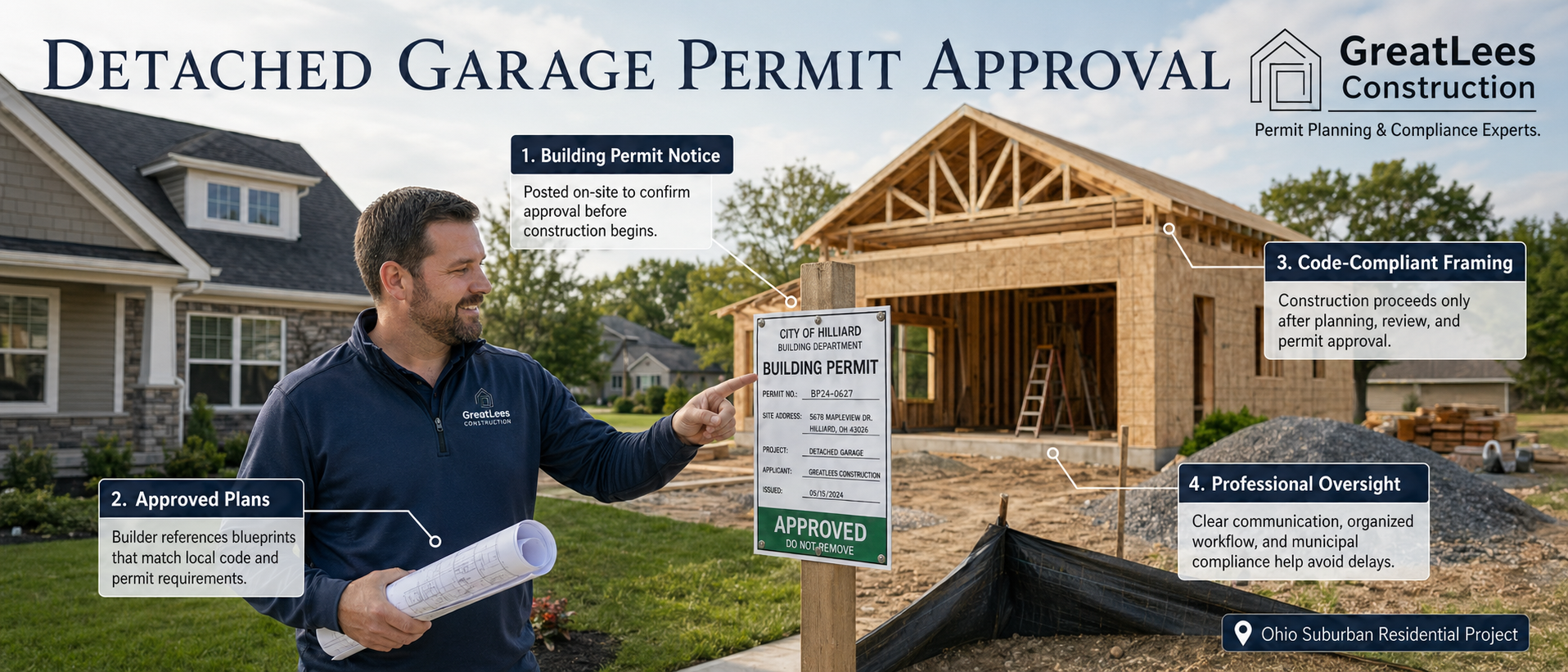
May 5, 2026
Navigating the legalities of property improvements in the Buckeye State requires a clear understanding of the Ohio residential building code. While many homeowners assume that small accessory structures are exempt from oversight, the reality is that most garage projects involve structural, safety, and land-use regulations that necessitate official approval.
Failing to secure the proper building of a garage can lead to costly fines, forced demolition, or significant complications during the future resale of your home. The threshold for requiring a garage permit typically depends on the total square footage and the intended utility of the structure.
For instance, in many jurisdictions like Toledo or Canton, a permit-free garage size is generally limited to structures under 200 square feet; once you exceed this limit, a full building permit and plan review become mandatory. To protect your investment, you must verify requirements with your specific county building departments, as local ordinances often impose stricter standards than the baseline state code.
Permitting is a legal mandate designed to validate structural integrity. All detached and attached structures require detailed footing and foundation drawings to ensure stability against soil variance and frost lines. Furthermore, any integration of electrical systems requires a dedicated permit and certified oversight. Specialized builds, such as post-frame structures, must undergo rigorous engineering review to meet residential safety standards.
A critical component of your application is the site plan/site layout, which must clearly illustrate the location of the proposed garage in relation to existing structures and property lines. Officials use these documents to verify that your project respects garage setback requirements, which often mandate a minimum distance (frequently 3 to 10 feet) from neighboring boundaries. If you live within a managed community, remember that municipal approval does not supersede HOA approval; you must satisfy both entities before breaking ground.
Zoning and building codes function as the invisible blueprint for any construction project, dictating exactly where and how a structure can exist on your land. A zoning permit is often the first hurdle, focusing on land use and ensuring the garage doesn’t infringe on easements or violate “accessory structure” density limits.
These zoning laws and building codes, unspoken rules, are strictly monitored by code enforcement officers who have the authority to halt construction if a structure deviates from the approved site plan. In unincorporated areas, these rules may be managed at the county level rather than by a city office, making a County Auditor report a vital tool for verifying your exact property dimensions and current tax status.
The residential building code sets the technical benchmark for every component of your garage, from the thickness of the anchor bolts to the fire-rating of the interior walls. If a detached garage is located within 10 feet of the primary residence, the code typically requires the interior to be finished with fire-rated drywall to prevent the spread of flames. Structural stability is also a priority; for example, specific rafter ties and double top plates are often required to manage the snow loads common in winter.
Beyond the walls, the code extends to the very ground the garage sits on, requiring specific drainage slopes to prevent water from pooling against the foundation. For those building larger shops or multi-car units, the foundation must often reach a full 30-inch depth to get below the frost line and prevent heaving. Every detail, down to the requirement for a side-hinged “man door” for emergency egress, is designed to ensure that your new garage is as safe as it is functional.
Post-frame buildings (pole barns) are categorized as accessory structures, and they almost always require a building permit if they exceed 200 square feet. Because these structures rely on deeply buried pressure-treated posts rather than a traditional continuous foundation, the residential building code mandates specific engineering reviews to ensure wind resistance and structural load bearing.
Many homeowners mistakenly believe that agricultural exemptions apply to all pole barns, but if the building is for residential storage or a workshop, it must meet standard residential safety codes. You must provide a comprehensive site plan/site layout to your local building department to verify that the structure does not interfere with existing utility easements or protected wetlands. Failure to obtain these approvals can result in a “Stop Work” order from code enforcement, potentially doubling your costs in legal fees and reconstruction.
While you might be able to build a very small shed under 200 square feet without a structural permit, you still cannot ignore zoning permit regulations regarding placement. Even if a permit is not required for the size, you must respect garage setback requirements to ensure the building is not too close to the property lines.
In unincorporated areas, the rules may feel more relaxed, but the County Auditor report will still reflect any permanent structures added to the land. Building Barn without a permit is a high-risk gamble that can lead to significant issues with insurance coverage or title transfers when you decide to sell the property.
Adding power to a detached or attached garage is a significant modification that necessitates a garage electrical permit. This permit ensures that the wiring, sub-panels, and outlets meet the National Electrical Code (NEC) standards to prevent fire hazards and electrical shocks. To pass the mandatory inspections, the state strongly recommends or requires the work to be performed or supervised by a licensed electrician who understands local load requirements.
Inspectors will check for proper grounding, the use of GFCI protection, and the depth of underground conduit before any trenches are backfilled. Skipping this step not only endangers your family but can also result in your homeowners’ insurance policy being voided in the event of an electrical fire.
The transition from a conceptual design to a physical structure requires a disciplined approach to site preparation and a strict adherence to the state’s inspection timeline. Before a single shovel hits the dirt, your site plan/site layout must be cross-referenced with the County Auditor report to ensure the garage does not encroach on protected easements or neighbor property lines.
Once the permit is issued, the ground must be cleared of organic debris and leveled according to the specifications in your footing and foundation drawings to prevent future structural settling. Local code enforcement officers typically require a “form inspection” to verify that reinforcement bars and gravel sub-bases are correctly positioned before any concrete is poured. Following these steps ensures that your investment remains compliant with the residential building code and avoids the costly “Stop Work” orders that plague unorganized projects.
The foundation is the most critical structural component, and inspectors demand a thorough review before the site is finalized for pouring. During this phase, officials verify that the footings reach the required 30-inch frost line depth to prevent the structure from heaving during harsh winter freezes.
They will also inspect the vapor barrier and the thickness of the stone base to ensure moisture won’t seep through the floor and damage your vehicles or tools. Approval at this stage is mandatory; proceeding with concrete curing/slab pouring without a signature can result in a legal order to tear up the new floor at your own expense.
Once the slab has cured and the walls begin to go up, a framing inspection is conducted to ensure the skeleton of the building is safe and stable. Inspectors look for proper header spans over garage door openings and confirm that the wall studs are spaced according to the approved engineering plans for wind resistance.
They also check the roof trusses to ensure they can handle the heavy snow loads common in Northern and Central. This checkpoint is vital because it occurs before the “skin” of the building is applied, allowing for easy correction of any structural miscalculations.
Before the interior walls are closed with drywall or insulation, a licensed electrician must ensure all wiring is accessible for a rough-in inspection. This review covers the placement of outlets, the routing of conduit, and the installation of the sub-panel as dictated by your garage electrical permit.
The inspector verifies that all circuits are properly grounded and that GFCI protection is planned for every outlet near a concrete floor. Failing to pass this inspection stops the project in its tracks, as you cannot legally cover the wiring until the “OK” is documented by the building department.
The final inspection is the conclusive walkthrough where code enforcement verifies that the completed garage matches the original permit application in every detail. They will check for the installation of self-closing fire doors if the garage is attached, proper exterior drainage, and the completion of all electrical trim-out.
If the structure satisfies all aspects of the building permits process, you will receive a Certificate of Occupancy or a final sign-off. This document is essential for your records, as it proves to future buyers and insurance companies that the garage was built to the highest safety standards.
Prefabricated garages are a popular, cost-effective choice, but they are subject to the same rigorous building permits process as stick-built structures. Even if the garage is delivered pre-assembled, it must be anchored to a foundation that meets the Presidential building code for frost protection and uplift. Most county building departments require the manufacturer’s structural specifications to be submitted with your application to ensure the unit can handle regional snow loads.
You must also account for any internal modifications, such as insulation or windows, which may require additional inspections beyond the initial delivery. Understanding these logistics early prevents the frustration of having a new building delivered that you aren’t legally allowed to install.
Building a garage in the state of a significant undertaking that requires a meticulous balance of structural engineering and legal adherence. By securing the necessary building permits and strictly following the residential building code, you ensure that your investment is both safe for use and legally protected. Navigating the complexities of zoning permit requirements, and garage setback requirements may seem daunting, but these regulations serve to maintain property values and community safety.
Ultimately, a well-documented construction process, backed by the expertise of a licensed electrician and clear footing and foundation drawings, provides the peace of mind that your structure will withstand both the elements and future legal scrutiny.The path from the initial site plan/site layout to the final occupancy sign-off is defined by critical milestones and professional oversight.
Leveraging resources like a County Auditor report and maintaining open communication with county building departments can prevent the administrative delays that often stall major projects. Whether you are opting for traditional construction, post-frame buildings (pole barns), or a modern prefabricated unit, the importance of official code enforcement inspections cannot be overstated. By prioritizing transparency and compliance from the start, you guarantee a seamless transition from a construction site to a functional, high-value addition to your home.
If you skip the permit process, code enforcement can issue a “Stop Work” order and charge you daily fines until the structure is brought into compliance. In extreme cases, your local building department may force you to demolish the garage or pay for invasive inspections to prove the hidden structural work meets the residential building code.
Yes, the vast majority of garage projects require a full building permit to ensure safety and structural integrity. Even if the building is a smaller accessory structure, you are almost always required to obtain a zoning permit to verify that the placement respects mandatory property lines and setback rules.
Building a standard detached garage for $10,000 is extremely difficult in 2026, as most professional builds start at approximately $15,000 to $25,000. You might achieve this budget only by performing all the labor yourself and using basic materials, though costs for concrete curing/slab pouring and a licensed electrician often consume a large portion of that amount.
A 10×12 shed totals 120 square feet, which typically falls under the threshold for a structural building permit in most jurisdictions. However, while you may avoid a building permit, you are still legally required to secure a certificate of zoning compliance to ensure the shed is not encroaching on garage setback requirements.
Under the residential building code, the maximum floor area for a detached shed without a structural permit is 200 square feet. Regardless of the size, you must still adhere to local zoning laws regarding height, placement in the rear yard, and distance from neighbor property lines.

Veteran Owned & Operated Since 2017
4.1 Average Rating (31 Reviews)
17601 W 130th St Suite #4
North Royalton, OH 44133
Monday - Friday: 8:00 AM - 5:00PM