SAME DAY ESTIMATES AVAILABLE
CALL FOR A FREE ESTIMATE
(440) 457-7064
May 5, 2026
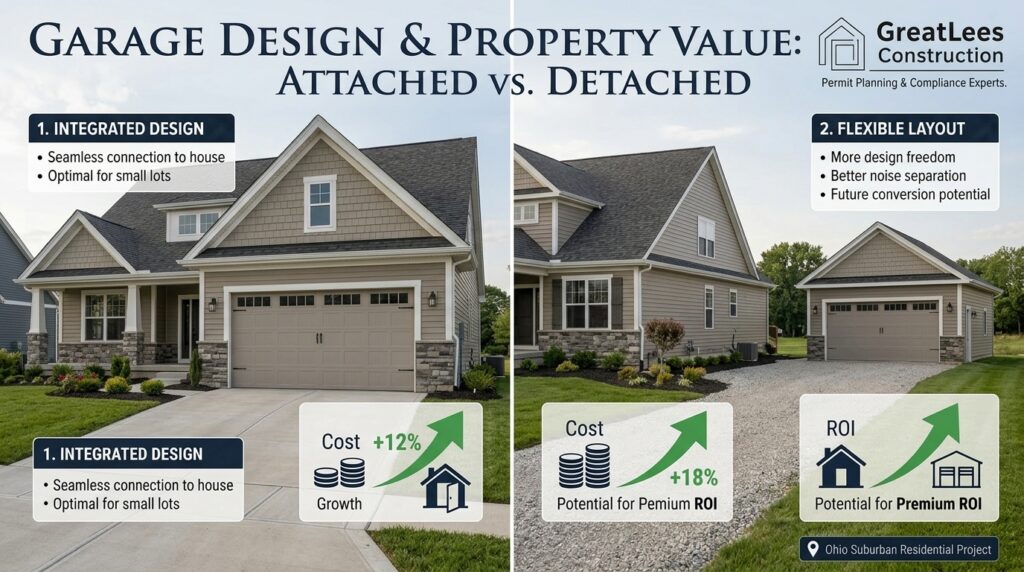
Choosing between an attached and a detached garage is a pivotal decision that dictates your property’s long-term utility and overall market value. An attached garage offers the convenience of direct access to your living quarters, making it a preferred choice for homeowners prioritizing seamless daily transitions. Conversely, a standalone structure provides unparalleled flexibility for those seeking a dedicated workspace or a significant living space conversion.
This guide breaks down the essential factors of property layout and architectural integration to help you determine the best garage type for your needs. When evaluating your options, you must weigh the immediate convenience of vehicle protection against the long-term ROI (Return on Investment) of each structure. Detached garage costs often vary significantly based on utility connections and independent foundations, whereas attached units typically share existing walls.
Beyond mere storage, these spaces can evolve into a home office or gym, adding substantial curb appeal to your residence. Navigating local permits and zoning laws is the first step toward ensuring your project enhances both home functionality and value without legal complications.
Deciding on the ideal configuration requires a ruthless assessment of your land availability and the specific property size constraints you face. If you have a narrow lot, an attached metal garage might be the only viable way to maximize your footprint while maintaining direct access to your kitchen or mudroom. However, a detached structure is often superior if you intend to mitigate noise pollution or require enhanced fire safety by keeping combustible materials away from the main house.
You must prioritize your primary objective—whether that is maximizing convenience for harsh weather conditions or creating a secluded rental income suite. Your choice should reflect a balance between immediate building increments and the overarching architectural harmony of your existing home.
The fundamental distinction lies in the structural relationship to the primary residence, which dictates everything from utility costs to architectural integration. Attached garages are built as an extension of the home’s envelope, offering unmatched protection during harsh weather conditions but often requiring stricter adherence to residential fire codes.
In contrast, detached garages function as a standalone structure, allowing for more creative freedom in design and the potential for a larger property layout without overshadowing the main house. While attached units offer easy direct access, detached versions excel in providing a buffer for loud activities, effectively isolating noise pollution from your quiet living areas.
An attached garage is a powerhouse for daily efficiency, providing a secure entry point that eliminates the need to face the elements when unloading groceries. This seamless integration often results in higher immediate resale appeal for traditional families who prioritize safety and convenience above all else.
However, a detached garage can significantly boost property value by offering versatility for a future living space conversion or a high-end workshop. Both options contribute differently to your ROI, depending on whether the buyer values integrated ease or the privacy of an independent structure.
Before breaking ground, you must consult local building departments to understand the specific zoning laws that govern building increments and setback requirements. Attached garages usually fall under the same permit categories as home additions, which can be more stringent regarding structural tie-ins and shared firewalls.
Detached structures may face different height restrictions or land use limitations, especially if you plan to include utility connections for a bathroom or kitchen. Ignoring these legal prerequisites can lead to costly fines or the forced removal of your new standalone structure during a property sale.
Detached metal garages offer a level of durability and customization that traditional wood-frame buildings struggle to match at a similar price point. Using a professional customizing tool, you can specify dimensions that accommodate everything from standard SUVs to specialized equipment or even metal carports for overflow vehicle protection. These structures are engineered to withstand extreme environmental stressors, ensuring your assets remain safe from moisture and pests over decades of use.
Because they sit on independent foundations, you have the freedom to place them strategically on your lot to maximize both curb appeal and functional land use. This versatility makes them a superior choice for homeowners who refuse to settle for the rigid limitations of a standard attached structure.
Detached metal garages offer a level of durability and customization that traditional wood-frame buildings struggle to match at a similar price point. Using a customizing tool, you can specify dimensions that accommodate everything from standard SUVs to specialized equipment or even metal carports for overflow vehicle protection.
These structures are engineered to withstand extreme environmental stressors, ensuring your assets remain safe from moisture and pests over decades of use. Because they sit on independent foundations, you have the freedom to place them strategically on your lot to maximize both curb appeal and functional land use.
If you plan to transform your garage into a home office or gym, planning for robust utility connections during the initial phase is non-negotiable. Running electricity, HVAC, and data lines to a detached metal garage requires careful trenching and adherence to specific local permits for outbuildings.
This upfront investment is what turns a simple storage shed into a high-functioning extension of your home that can generate rental income or serve as a professional studio. Without proper climate control and power, the versatility of your detached structure remains severely limited, undermining your long-term property goals.
The placement of a detached garage can dramatically alter the visual profile of your property, either framing the main house or providing a modern architectural counterpoint. By selecting finishes that complement your home’s exterior, you ensure that the new metal structure feels like an intentional part of the property layout rather than an afterthought.
Strategic positioning can also create private courtyard spaces or shield your backyard from street views, enhancing your overall living experience. A well-designed detached garage doesn’t just store cars; it redefines the aesthetic and functional boundaries of your entire estate.
Deciding on the perfect garage requires a deep dive into your specific lifestyle needs and the physical limitations of your property. An attached garage is the gold standard for homeowners who prioritize direct access and safety during harsh weather conditions, especially when carrying groceries or moving children. However, a detached standalone structure is often the better choice if you are planning a living space conversion or need to isolate noise pollution from a home workshop.
You must also consider the long-term ROI (Return on Investment) and whether your local permits allow for the specific building increments you envision. Ultimately, your choice will dictate the flow of your daily routine and the functional capacity of your entire property layout.
| Feature | Attached Garage | Detached Garage | Key Consideration |
| Direct Access | Yes (Interior Door) | No (Walkway Required) | Convenience vs. Isolation |
| Construction Cost | Lower (Shared Walls) | Higher (New Foundation) | Budget for Utility Connections |
| Noise Pollution | High (Near Living Areas) | Low (Standalone) | Ideal for Gyms/Workshops |
| Fire Safety | Stricter Code Req. | Naturally Safer Gap | Protection of the Main Home |
| Curb Appeal | Integrated Look | Flexible Placement | Architectural Integration |
| Property Size | Needs Less Land | Needs More Space | Land Availability |
| Living Conversion | Easier for Bedrooms | Better for Rental Income | Future ROI Potential |
| Vehicle Protection | Climate-Linked | Fully Independent | Resistance to Weather |
The visual harmony of your home depends heavily on how you integrate a new garage into your existing architectural style. An attached garage often blends seamlessly with the main house, but it can dominate the front facade and reduce the overall curb appeal if not designed with precision. On the other hand, a detached structure allows you to play with the property layout, potentially hiding the garage behind the house to emphasize the home’s primary entrance.
You must evaluate your property size constraints to ensure that a standalone structure doesn’t swallow your entire backyard or violate setback zoning laws. Strategic placement can actually enhance your landscape, creating private courtyards and better defining the functional zones of your outdoor space.
To maintain a high-end look, your garage must mirror the materials and rooflines of your primary residence for cohesive architectural integration. Whether you are building an attached metal garage or a wooden standalone structure, the siding and trim should match the main house perfectly.
This attention to detail prevents the garage from looking like a disjointed afterthought that detracts from the property’s market value. Consistent design choices ensure that the new addition feels like an original part of the estate’s master plan.
Homeowners with limited acreage must be ruthless when calculating how much land they can realistically dedicate to a new vehicle protection structure. Attached garages are generally more space-efficient because they utilize existing setbacks and eliminate the need for extra driveways or walkways.
If you opt for a detached model, you must account for the required gap between buildings as mandated by fire safety regulations and local permits. Efficient land use is the difference between a property that feels spacious and one that feels cluttered and poorly planned.
From a purely financial perspective, building an attached garage is typically the more cost-effective route because it leverages the existing structure for support and insulation. Detached garage costs are almost always higher due to the necessity of independent foundations, separate roofing systems, and individual utility connections for power or heat.
You must also factor in the price of extending your driveway to reach a standalone structure, which can add thousands to the total building cost. While the initial investment for a detached unit is steeper, the flexibility it offers for a home office or gym can sometimes justify the extra expenditure. A detailed cost-benefit analysis should be your first step before signing any construction contracts.
The impact on your home’s resale value varies depending on the expectations of buyers in your specific regional market. In urban areas where land is a premium, an attached garage is often viewed as a mandatory convenience that significantly boosts home functionality and value. However, in suburban or rural settings, a detached garage—especially one with a living space conversion—can attract hobbyists and entrepreneurs willing to pay a premium for privacy.
You must research local trends to ensure your chosen garage type aligns with what future owners will prioritize in a property. A poorly placed or cheaply constructed garage can actually decrease your ROI by ruining the home’s aesthetic flow.
Building a high-quality garage doesn’t have to bankrupt you if you are willing to make strategic compromises on materials and sizing. You can use a customization tool to find the most efficient dimensions that minimize waste and reduce the overall price of your metal or wood components.
Consider starting with a basic metal carport if your immediate need is simply vehicle protection, as these can often be enclosed at a later date. Being proactive about securing local permits and understanding zoning laws early will also prevent expensive mid-project corrections that derail your budget.
Determining whether an attached or detached garage suits your property requires a balanced evaluation of long-term ROI and immediate lifestyle needs. While an attached garage offers unparalleled convenience and direct access, a detached standalone structure provides the necessary separation for a high-functioning home office or gym. You must meticulously weigh your property size constraints against your desire for architectural integration to ensure the final build enhances your home’s overall curb appeal.
Investing in a high-quality garage—whether a seamless home extension or a durable detached metal garage—is a proven strategy to boost home functionality and value. By utilizing a customizing tool and adhering to smart building increments, you can mitigate detached garage costs and maximize your property layout’s efficiency. Consider the potential for a living space conversion or rental income as key drivers for long-term financial gain beyond simple storage.
In most suburban markets, an attached garage is considered more valuable because it provides the highly sought-after convenience of direct access to the home. However, a detached garage can offer higher ROI (Return on Investment) if it is designed for a living space conversion or a specialized home office or gym.
For a standard 24×24 structure in 2026, you can expect to pay between $35,000 and $60,000 depending on materials and local labor rates. Detached garage costs typically lean toward the higher end of this scale due to the need for independent foundations and separate utility connections.
The primary advantage is seamless entry during harsh weather conditions, providing superior vehicle protection and daily convenience. On the downside, they often carry higher risks regarding fire safety and can lead to increased noise pollution within the main living areas.
Generally, an attached garage is less expensive to build because it utilizes the home’s existing structural walls, reducing the need for new framing and siding. Conversely, a standalone structure requires entirely new walls and roofing, often leading to higher building increments and complex local permits.
Yes, an attached garage typically adds between 5% and 10% to a home’s total market value by improving home functionality and value. It is a major selling point for buyers who prioritize curb appeal and the security of a built-in entry point to the residence.

Veteran Owned & Operated Since 2017
4.1 Average Rating (31 Reviews)
17601 W 130th St Suite #4
North Royalton, OH 44133
Monday - Friday: 8:00 AM - 5:00PM