SAME DAY ESTIMATES AVAILABLE
CALL FOR A FREE ESTIMATE
(440) 457-7064
May 5, 2026
Building a garage in the Buckeye State is a strategic investment that offers both practical storage solutions and a significant boost to your property’s long-term market value. As we move through 2026, Ohio homeowners are facing a unique construction landscape shaped by fluctuating lumber prices, evolving building codes, and a high demand for skilled regional labor.
A well-planned garage project requires a deep dive into local material availability and seasonal weather considerations to ensure the structure survives harsh winters. The financial commitment for a garage in typically involves balancing high-quality foundations with durable roofing materials that can withstand heavy precipitation and wind.
Current market data suggests that while national averages provide a baseline, specific zoning requirements and soil compositions can introduce unique cost variables into your budget. Navigating these expenses involves more than just buying materials; it requires a comprehensive look at permits, site preparation, and the long-term ROI of the structure.
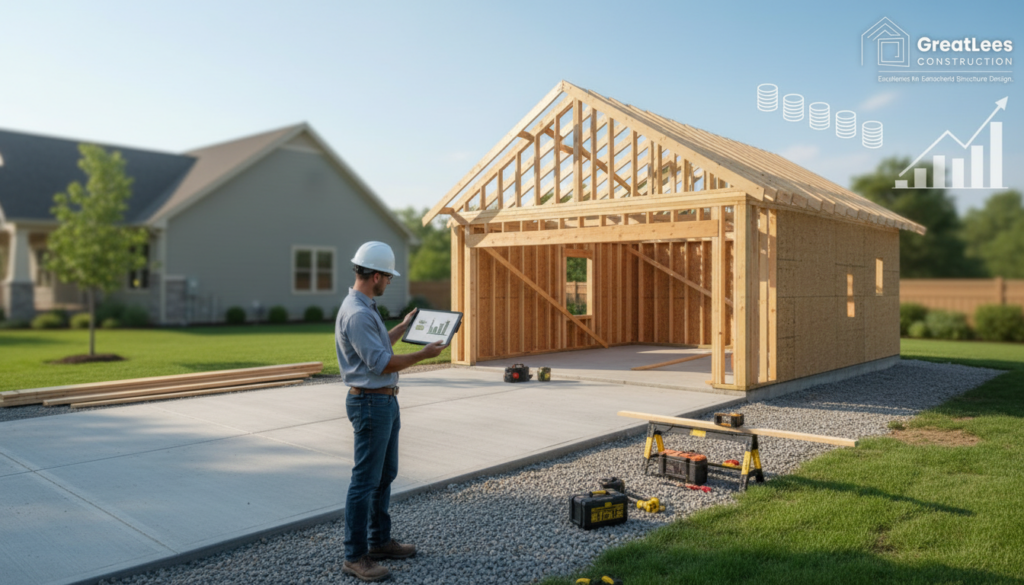
In 2026, the average cost to construct a garage in O typically falls between $35,000 and $70,000, depending heavily on the complexity and finish level of the project. This price range accounts for the rising costs of specialized wood framing labor rates and the high-grade concrete slab foundation price required for frost lines.
Homeowners should also factor in approximately $1,500 to $3,500 for professional building permits and zoning laws compliance, which varies significantly between cities like Columbus, Cleveland, and Cincinnati. Furthermore, the total expenditure will include the cost of running electricity to a detached garage. This task necessitates hiring a licensed electrician to ensure safety.
When calculating your budget, the garage cost per square foot is the most reliable metric, currently averaging between $55 and $105 for residents. This figure is influenced by the choice between custom vs. prefab garage kits, with custom builds naturally commanding a higher price due to specialized architectural features.
The roofing material per square foot also plays a major role, as premium shingles or metal roofing will increase the per-square-foot cost but offer better protection against regional storms. Labor remains a significant variable, as hiring a reputable general contractor ensures the project meets the standards of the local building inspector.
The footprint of your garage is the primary catalyst for scaling expenses, as every additional foot requires more raw materials, specialized labor, and permit oversight. In 2026, building a garage means navigating a market where standard dimensions like 12×20, 20×24, and 24×36 represent specific functional tiers with distinct price points.
While a larger square footage naturally increases the concrete slab foundation price and the roofing material per square foot, it often yields a higher resale value of a garage (ROI) by meeting modern buyer demands for storage and workshop space.
A 12×20 single-car garage is a compact and cost-effective choice for homeowners with limited yard space or a single vehicle. This size typically focuses on functional utility, providing just enough room for a standard car and a small amount of wall-mounted storage. Because of its smaller footprint, the concrete slab foundation price is significantly lower, making it an accessible entry point for new construction.
The average cost of a 2-car garage is typically calculated using the standard 20×24 footprint, which provides 480 square feet of functional area. These dimensions are widely recognized as the industry benchmark, offering sufficient clearance for two vehicles alongside dedicated space for a workbench or seasonal storage. Due to this size being a universal favorite, a vast selection of prefabricated kits is manufactured to these exact specifications, significantly reducing the specialized wood framing labor rates required for assembly.
For those requiring maximum storage or a multi-use workshop, the 24×36 three-car garage offers a sprawling 864 square feet of interior space. This larger structure requires a more complex garage construction cost breakdown, as it often involves heavy-duty beams and larger roofing spans. The garage door installation costs will also double or triple, depending on whether you choose multiple single doors or one large double door.
Selecting between attached-garage construction costs and a standalone structure entails a critical trade-off between immediate convenience and long-term design flexibility. Attached garages typically offer a lower entry price point because they share at least one structural wall with the existing home and provide easier access to the main electrical panel.
However, these savings can be offset by the need for expensive fire-rated drywall, high-efficiency insulation to prevent heat loss from the house, and complex foundation tie-ins that satisfy a local building inspector.
| Comparison Factor | Attached Garage (2026) | Detached Garage (2026) | Primary Cost Driver |
| Average Base Cost | $30,000 – $55,000 | $38,000 – $70,000 | Structural Walls & Foundation |
| Foundation Type | Slab-on-grade with tie-ins | Independent concrete slab foundation | Excavation & Frost Line Depth |
| Electrical Setup | Direct tie-in to home panel | Sub-panel via underground trench | Distance & Electrician Labor |
| Permit Difficulty | High (Fire & Structural codes) | Moderate (Zoning laws & Setbacks) | Municipal Compliance Checks |
| Construction Time | 4 – 6 Weeks | 5 – 8 Weeks | Site Prep & Independent Shell |
| Utility Accessibility | Integrated HVAC/Plumbing | High cost for independent lines | Trenching & Pipe Insulation |
| ROI / Resale Value | Higher (Convenience factor) | Higher (Workshop/Flex appeal) | Market Buyer Preference |
| Material Usage | Lower (Shared structural wall) | Higher (Full four-wall enclosure) | Roofing material per square foot |
When deciding between a custom vs. prefab garage kit, the primary tradeoff involves initial expense versus long-term flexibility. Prefabricated options are generally more budget-friendly because they are mass-produced in a controlled factory environment, reducing the total wood framing labor rates required on-site.
However, a custom on-site build allows for complete architectural harmony with your existing home and higher quality control over every material used. In 2026, many homeowners are opting for high-end prefab kits that mimic custom aesthetics while keeping the garage cost per square foot manageable.
Several variables dictate the final price tag of a garage project, beginning with the complexity of the site and the materials selected. The concrete slab foundation price can fluctuate based on the slope of your land and the amount of excavation required to reach the frost line. Additionally, the choice of roofing material per square foot—ranging from basic asphalt to premium metal—will shift the budget by thousands of dollars. Local labor availability in also plays a role, as high demand for trades can inflate standard wood framing labor rates.
Before the first pour of concrete, the site must be cleared, leveled, and graded to ensure proper drainage. If your property has rocky soil or a steep incline, the preparation costs can quickly consume a large portion of your initial budget. Proper grading is essential to satisfy the local building inspector and prevent future water damage to the foundation. Skipping this step can lead to structural issues that diminish the long-term resale value of a garage (ROI).
The durability of your garage is directly tied to the quality of the lumber, siding, and roofing materials you select. Choosing a high-wind-resistant garage door installation costs more upfront but provides essential protection during volatile storm seasons. Similarly, opting for energy-efficient windows and insulated siding can reduce long-term climate control expenses if the space is used as a workshop. High-quality materials not only look better but also require less maintenance over the structure’s lifespan.
Navigating building permits and zoning laws is a mandatory step that carries both administrative fees and potential design constraints. Depending on your specific municipality, you may be required to adhere to specific setbacks or maximum height restrictions for a detached garage cost 2026. Failure to secure the correct permits can result in heavy fines or the forced removal of the structure. Always consult with a general contractor who is familiar with regional codes to avoid these costly legal hurdles.
Integrating water, gas, or specialized power lines adds a layer of complexity and expense to any garage construction cost breakdown. The cost of running electricity to a detached garage is a significant factor, especially if the structure is located far from the main house. Hiring a professional electrician is necessary to ensure the load can support heavy power tools or electric vehicle charging stations. These functional upgrades increase the utility of the space but require careful financial planning.
In 2026, labor stands as the most substantial expense in a garage construction cost breakdown, frequently consuming 40% to 50% of the total project budget. For a standard build, you should anticipate spending between $25 and $45 per square foot exclusively on professional trade services. This investment covers the essential expertise of general contractors, framing crews, and finishing specialists who ensure the structure is both weather-tight and visually polished.
As wood framing labor rates continue to rise due to a shortage of skilled tradespeople, booking your crew well in advance is essential to locking in current market prices. High-quality craftsmanship at this stage is vital, as it directly impacts the structural integrity and the final approval from the local building inspector.
Adding a loft or a full apartment above your garage is a popular way to maximize square footage and significantly increase your property’s value. This type of project requires a much more robust concrete slab foundation and reinforced framing to support the additional weight of a second floor.
You must also account for the complex cost of running electricity to a detached garage with living quarters, including separate HVAC systems and plumbing. While the average cost of a 2-car garage with an apartment can reach $100,000 or more, the potential for rental income or a private guest suite makes it a highly desirable upgrade.
The final invoice for a garage build rarely matches the initial shell estimate because of “hidden” expenses that emerge during site preparation and utility integration. In 2026, homeowners must account for the logistical reality that a general contractor cannot begin work until the land is professionally graded and cleared of existing obstructions. Failing to identify these variables early is the most common cause of mid-construction budget exhaustion and project delays.
Building a garage is a multifaceted endeavor that requires a strategic balance between current construction trends and long-term property utility. By carefully analyzing the garage construction cost breakdown and accounting for regional variables like frost line depth and permit fees, homeowners can avoid common financial pitfalls. Ultimately, prioritizing high-quality materials and professional labor ensures that your new structure provides lasting security for your vehicles while significantly enhancing your home’s market appeal.
Navigating the complexities of building permits and zoning laws alongside a trusted general contractor is the most effective way to guarantee a seamless project delivery. As the demand for versatile home spaces grows, integrating modern features such as EV charging stations or reinforced foundations will solidify the resale value of a garage (ROI) for years to come. With a clear understanding of the garage cost per square foot and a realistic contingency fund, you can confidently break ground on a project that meets your functional needs and aesthetic aspirations.
Buying a prefabricated garage kit is generally the most cost-effective option, as these mass-produced structures drastically reduce the wood framing labor rates associated with custom builds. However, while “buying” a kit saves on the initial shell, you must still budget for the concrete slab foundation price and utility hookups, which can narrow the price gap compared to building on-site.
In 2026, the cost to build a garage typically ranges from $35,000 to $70,000, with localized factors like Columbus or Cleveland zoning fees influencing the final tally. This estimate accounts for specific climate requirements, such as deeper footings and reinforced roofing material per square foot to handle heavy winter snow loads.
A standard 20×20 garage, providing roughly 400 square feet of space, usually costs between $18,000 and $38,000 depending on whether it is a basic shell or a fully finished unit. This size is a popular choice for homeowners looking to balance a manageable garage cost per square foot with enough room for two compact vehicles.
A monolithic concrete slab with thickened edges is considered the best foundation for garages because it provides superior stability and resists moisture better than other styles. For colder regions, a frost-protected shallow foundation (FPSF) is often recommended to prevent “frost heave,” ensuring the concrete slab foundation price pays off with long-term structural integrity.
Building a 24×24 garage as a DIY project can save you approximately 50% to 70% on labor, potentially bringing your out-of-pocket costs down to the $15,000 to $25,000 range for materials. However, you will still need to hire a professional electrician for wiring and account for the high costs of specialized tools, local building permits and zoning laws.

Veteran Owned & Operated Since 2017
4.1 Average Rating (31 Reviews)
17601 W 130th St Suite #4
North Royalton, OH 44133
Monday - Friday: 8:00 AM - 5:00PM