SAME DAY ESTIMATES AVAILABLE
CALL FOR A FREE ESTIMATE
(440) 457-7064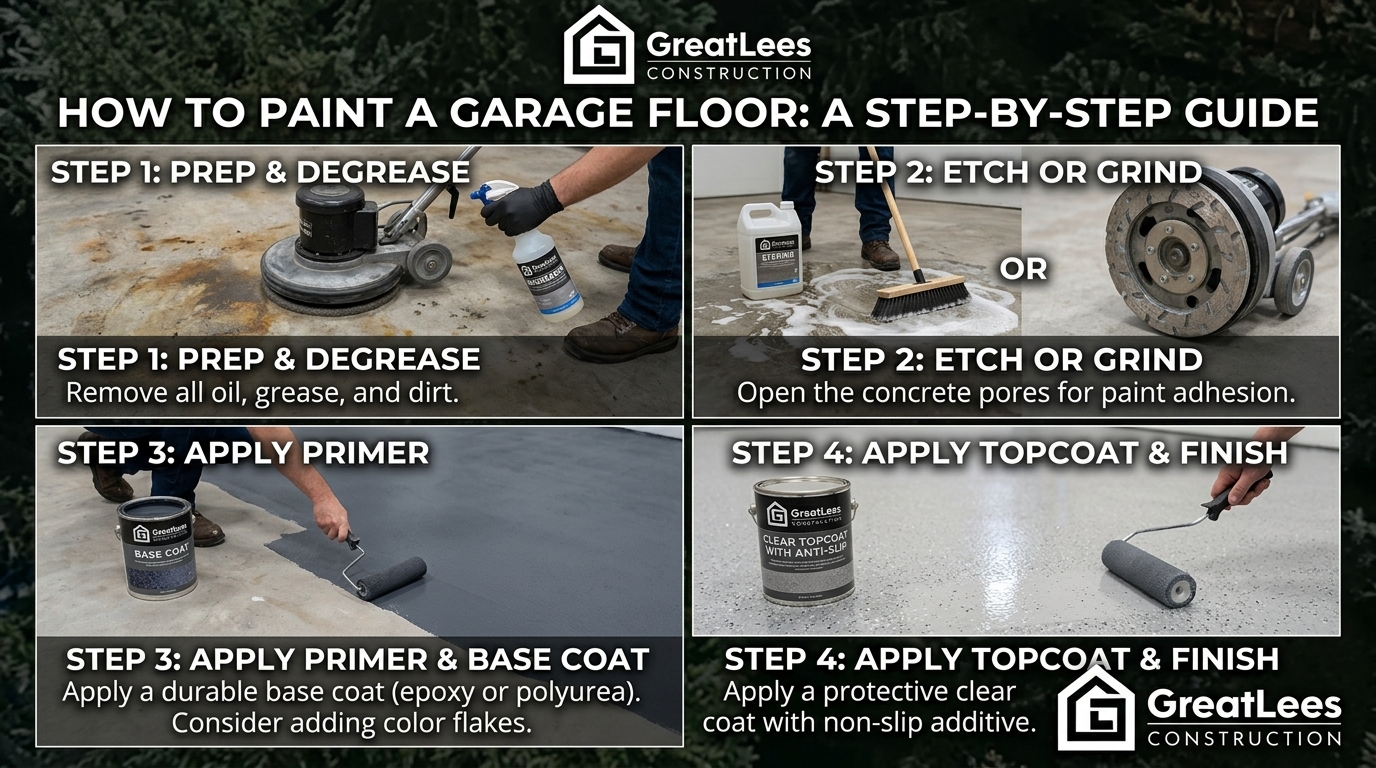
March 13, 2026
Painting a garage floor is one of the most effective ways to improve both the look and functionality of your garage. A freshly painted floor can protect against stains, moisture, and daily wear while adding a clean, professional finish. Whether you want a simple color upgrade or a durable epoxy coating, the process requires careful preparation and the right materials to achieve lasting results.
Many homeowners overlook garage floor painting as a home improvement project, but it can significantly extend the life of your concrete surface. From choosing the right paint to ensuring proper curing, each step plays a crucial role in creating a floor that is both attractive and durable. Understanding the process before starting can save time, money, and frustration, ensuring the best outcome for your space.
Painting a garage floor offers both practical and aesthetic benefits. A painted floor resists stains from oil, chemicals, and water, making cleanup easier. Additionally, it can brighten the garage, making it feel more like a usable extension of your home rather than just a storage area.
Beyond appearance, painting a garage floor provides protective benefits. Concrete is porous and can absorb moisture, leading to cracks, mold, or mildew. Applying a durable paint or epoxy coating helps seal the surface and extend the floor’s lifespan while also adding slip resistance for safety.
Epoxy coatings provide a thicker, more resilient finish that withstands heavy traffic and chemical spills. Standard concrete paint is easier to apply but may require more frequent touch-ups. Choosing epoxy is ideal for garages that see vehicles, tools, and heavy foot traffic, while paint works for lighter use and decorative purposes.
A fresh paint job instantly improves the look of the garage. Choosing neutral colors or metallic finishes can give a polished, showroom-like feel. Decorative chips or patterns add a stylish touch while camouflaging minor imperfections.
Certain paints or epoxy finishes contain non-slip additives. This reduces the risk of accidents from wet or oily surfaces. Safety is particularly important in garages used as workshops or for children’s activities.
Proper materials ensure a long-lasting, professional finish. Essential items include concrete cleaner, etching solution, primer, paint or epoxy, rollers, brushes, and protective gear.
Using the right quality paint or epoxy significantly affects durability. Lower-quality products may peel or fade over time, wasting both effort and money. Preparing the floor thoroughly and applying materials correctly is crucial for the best results.
Preparation is the most critical step in painting a garage floor. Start by clearing the garage entirely and removing dust, dirt, and grease. A clean surface allows the paint or epoxy to adhere properly, preventing peeling or bubbling.
Concrete may require etching to open up the surface pores. This ensures the coating bonds well, especially for older or smooth floors. Repairing cracks and chips is also essential, as imperfections can show through the paint and reduce durability.
Use a high-pressure washer or scrub with a stiff-bristle brush. Degrease spots with a commercial concrete degreaser. Rinse thoroughly and allow the floor to dry completely before moving to the next step.
The etching solution slightly roughens the surface to help paint stick. Follow product instructions carefully and neutralize afterward. Ensure the garage is well-ventilated during this process.
Fill cracks with epoxy filler or concrete patch. Smooth with a putty knife for a level surface. Allow proper curing time before painting.
Choosing the right paint depends on your garage’s use and desired finish. Epoxy paints are durable and chemical-resistant, making them ideal for high-traffic garages. Acrylic concrete paints are easier to apply but less durable, suitable for decorative or light-use garages.
Painting requires careful technique to ensure a smooth, even coat. Start with a primer if recommended, then apply the first coat with a roller. Work in sections and use brushes for edges and corners. Allow adequate drying time between coats.
Primer improves adhesion and ensures even coverage. Roll primer in thin layers to prevent puddling. Follow the manufacturer’s instructions for drying time.
Roll paint in overlapping strokes to avoid streaks. Maintain a wet edge to prevent lap marks. Use multiple thin coats rather than a single thick coat.
Allow paint to dry for at least 24 hours between coats. Full curing may take up to a week, depending on humidity and temperature. Avoid heavy traffic until fully cured.
Garage floor paint can last anywhere from 2 to 10 years, depending on paint type and garage usage. Epoxy coatings generally last longer than acrylic paints. Proper preparation and maintenance significantly increase lifespan.
Yes, you can paint over existing garage floor paint, but proper surface preparation is essential. Scrape loose or peeling paint and clean thoroughly. Etching may be necessary for smooth or glossy surfaces.
Maintaining a painted garage floor prolongs its life and appearance. Regular cleaning prevents dirt and oil buildup, while avoiding harsh chemicals prevents damage. Minor scratches or chips should be repaired promptly.
Sweep regularly to remove dirt and debris. Mop with mild detergent to prevent staining.
Use floor mats in high-traffic areas. Avoid dragging heavy objects across the floor.
Keep leftover paint for touch-ups. Apply small repairs immediately to prevent peeling.
Painting a garage floor is a practical and aesthetic improvement that can transform your space. From preparation to application, each step ensures durability, safety, and a clean finish. Choosing the right paint and following proper techniques can make your garage look polished and professional.
Regular maintenance and timely touch-ups help extend the life of your painted floor. By following these guidelines, homeowners can achieve a garage floor that is functional, visually appealing, and resistant to stains and damage.
1. Can I paint a damp garage floor?
No, painting on a damp surface prevents proper adhesion. Ensure the floor is completely dry before starting.
2. How many coats of paint should I apply?
Two to three thin coats are ideal for even coverage and durability. Thick single coats may peel or bubble.
3. Do I need to use primer?
Primer is recommended for smooth or previously painted concrete. It improves adhesion and coverage.
4. Can I use spray paint for a garage floor?
Spray paint is not ideal for large floors. Rollers provide better coverage and a more durable finish.
5. How long before I can park my car?
Wait at least 24–48 hours for the paint to dry. Full curing may take up to a week.
6. Can epoxy paint be used over acrylic paint?
Yes, but ensure acrylic paint is well-adhered and primed before applying epoxy.
7. How do I remove oil stains before painting?
Use a degreaser or trisodium phosphate (TSP). Scrub thoroughly and rinse with water.
8. Is garage floor paint safe for pets?
Yes, once fully cured, most floor paints are non-toxic. Avoid pet contact until curing is complete.
At Great Lees Construction, we design and build high-quality outdoor structures for homeowners across Ohio. Whether you need a durable garage, a practical storage shed, or a spacious barn, our team delivers expert craftsmanship and long-lasting materials.
Looking for strong and reliable garages? We build custom garages in Ohio that provide secure parking, extra storage, and long-term durability for your property.
Learn MoreNeed additional storage space? Our storage sheds in Ohio are perfect for tools, lawn equipment, and backyard organization while enhancing your property’s appearance.
Explore ShedsOur team specializes in building custom barns in Ohio designed for farming, livestock, equipment storage, and multi-purpose rural use.
View Barns
Veteran Owned & Operated Since 2017
4.1 Average Rating (31 Reviews)
17601 W 130th St Suite #4
North Royalton, OH 44133
Monday - Friday: 8:00 AM - 5:00PM