SAME DAY ESTIMATES AVAILABLE
CALL FOR A FREE ESTIMATE
(440) 457-7064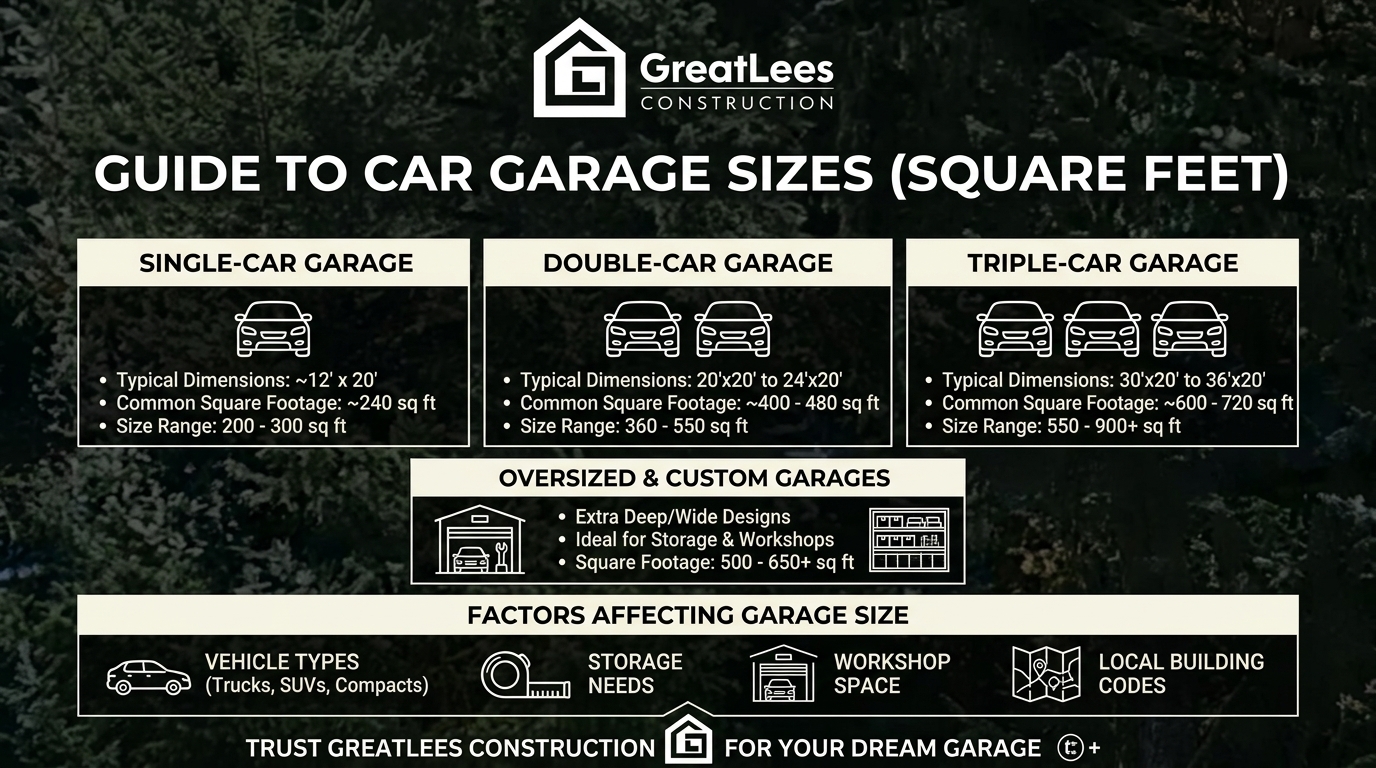
March 13, 2026
Building a car garage requires careful planning, and understanding the right square footage is essential for both functionality and convenience. Most homeowners underestimate the space needed for vehicles, storage, and maneuvering, which can result in a cramped and inefficient garage. Knowing the standard dimensions helps in designing a garage that accommodates your needs without wasting valuable space.
A car garage isn’t just about parking; it’s also a workspace, storage area, and sometimes a place for hobbies. The square footage of your garage influences accessibility, safety, and long-term usability. By analyzing average vehicle sizes, door clearances, and storage needs, homeowners can make informed decisions about garage dimensions.
A typical single-car garage is designed to fit one vehicle comfortably. Most standard single-car garages measure between 12 and 16 feet wide and 20 and 24 feet deep. These dimensions provide enough room to open doors fully and walk around the vehicle safely.
When considering the square footage, a standard single-car garage is usually around 240 to 384 square feet. This measurement depends on whether you want extra storage space for tools or other household items.
The width determines how easily you can park and exit the car. A minimum of 12 feet is required, but 14–16 feet is ideal. Wider garages allow additional shelving along the walls without crowding the vehicle.
Depth is crucial for car length and extra storage. Standard cars need around 18–20 feet, while SUVs or trucks may need 22–24 feet. Adding extra depth accommodates workbenches or storage cabinets.
Most garages have an 8–10 foot ceiling. Higher ceilings can support overhead storage and lofts. Ensure that the garage door height matches the vehicle plus additional clearance.
A two-car garage should provide enough space for two vehicles, storage, and comfortable movement. The standard width ranges from 20 to 24 feet, with depth around 20 to 24 feet. This configuration results in a total area of 400–576 square feet, depending on your layout and storage needs.
Double garages are often wider to include shelves, workbenches, or utility storage. They also require careful planning to avoid overcrowding vehicles. Proper spacing ensures ease of parking and reduces the risk of dents or scratches.
For two cars, at least 20 feet of width is required. A 24-foot width provides extra room for storage along the sides. Each car should ideally have 10–12 feet of width for easy maneuvering.
Depth should be at least 20 feet to fit vehicles comfortably. Adding 2–4 extra feet allows for cabinets or storage racks. This is especially useful for larger trucks or SUVs.
Garage doors for two-car setups typically measure 16 feet wide. Separate doors for each car can provide independent access. This setup improves convenience and aesthetics.
Some homeowners aim for compact garages to save costs. The minimum recommended size for a single-car garage is 12×20 feet. For a two-car garage, the minimum is 20×20 feet. Anything smaller may result in limited functionality and tight maneuvering space.
Even with a small footprint, it’s important to maintain clearances for doors and storage. A garage that is too tight can increase vehicle damage risk and reduce practicality. Planning for future vehicle sizes is also important.
Use vertical storage solutions to maximize space. Shelving and hooks can free up floor area. Foldable workbenches are a smart addition for small garages.
Compact cars require less space than SUVs or trucks. Adjust depth and width accordingly. Measure your vehicles before designing the garage.
| Feature | Attached Garage | Detached Garage |
| Construction | Part of the house | Separate building |
| Access | Direct entry from home | Walkway needed |
| Cost | Lower for structure | Higher due to a separate foundation |
| Security | Easier to secure | May need extra locks |
| Heating/Cooling | Easier to extend | Independent system required |
Attached garages are convenient and cost-effective, sharing walls with the main house. Detached garages offer flexibility and reduce noise transfer, but require extra planning for access and utilities.
Provide sheltered entry during bad weather. Easier to extend home security systems. Reduce construction costs by sharing walls.
More design freedom and fewer restrictions. Can be located farther from the house for aesthetics. Less impact on the home structure if modified.
Calculating garage square footage is straightforward. Multiply the width by the depth to get the total area. For example, a 24×24-foot garage equals 576 square feet.
Vehicle size, extra storage, and workspace needs. Overhead storage and lofts do not count toward floor square footage. Plan for future expansion if needed.
A 500-square-foot garage can typically fit two standard-sized cars comfortably. Each car would have approximately 10–12 feet of width and 20 feet of depth. With careful planning, additional storage or work areas can also be accommodated.
Use wall-mounted storage to free up floor space. Park vehicles strategically for maximum clearance. Avoid clutter near doors and walkways.
Overhead racks and shelving units work well. Consider cabinets along garage walls. Corner tool stations can utilize unused areas efficiently.
Larger vehicles require more garage space. Standard SUVs need at least 12×22 feet for a single-car garage. Trucks may require 14×24 feet or more to accommodate length and door opening clearance.
Add an extra 2–4 feet to the standard width. Ensure enough room for side mirrors and door clearance. Wider garages also allow for storage along walls.
SUVs and trucks require longer depths. At least 22 feet is recommended for larger vehicles. Add additional space for workbenches or bicycles.
Tall trucks may need 10–12 feet ceilings. Overhead storage should not obstruct vehicle doors. Ensure the garage door height accommodates the tallest vehicle.
Efficient garage design ensures usability. Use vertical storage options like wall hooks and shelves. Overhead storage helps clear floor space.
Calculating how many square feet a car garage requires is crucial for functionality and future-proofing. A garage that is too small can limit vehicle access and storage options. Proper measurement, planning for vehicle size, and storage needs are key factors for an efficient design. By understanding standard dimensions, homeowners can avoid costly mistakes and create a practical garage space.
Investing in a garage that meets your needs ensures comfort, convenience, and long-term usability. From single-car to large SUV garages, each requires careful consideration of width, depth, and ceiling height. Maximizing space with smart storage solutions improves overall functionality. Planning ahead ensures your garage remains useful for years to come.
1. What is the average square footage for a one-car garage?
A standard single-car garage usually ranges from 240 to 384 square feet. This allows enough space for parking and basic storage.
2. Can a 500-square-foot garage fit two cars?
Yes, a 500-square-foot garage typically accommodates two standard cars. Proper planning ensures space for walking and storage.
3. How wide should a two-car garage be?
A width of 20–24 feet is standard. Wider garages allow extra space for storage and ease of parking.
4. Do ceiling heights matter for garages?
Yes, most garages have 8–10-foot ceilings. Taller ceilings allow for overhead storage and lofts.
5. Is it better to have attached or detached garages?
Attached garages are convenient and cost-effective. Detached garages offer more design flexibility and reduce noise transfer.
6. How do I calculate garage square footage?
Multiply the garage width by its depth. For example, 24×24 feet equals 576 square feet.
7. Can SUVs fit in a standard two-car garage?
Standard garages may fit smaller SUVs, but larger SUVs require extra width and depth. Planning for vehicle size is essential.
8. What storage solutions maximize garage space?
Use vertical storage, overhead racks, and foldable workbenches. Label bins and maintain clear walkways for safety.
At Great Lees Construction, we design and build high-quality outdoor structures for homeowners across Ohio. Whether you need a durable garage, a practical storage shed, or a spacious barn, our team delivers expert craftsmanship and long-lasting materials.
Looking for strong and reliable garages? We build custom garages in Ohio that provide secure parking, extra storage, and long-term durability for your property.
Learn MoreNeed additional storage space? Our storage sheds in Ohio are perfect for tools, lawn equipment, and backyard organization while enhancing your property’s appearance.
Explore ShedsOur team specializes in building custom barns in Ohio designed for farming, livestock, equipment storage, and multi-purpose rural use.
View Barns
Veteran Owned & Operated Since 2017
5.0 Average Rating (7 Reviews)
17601 W 130th St Suite #4
North Royalton, OH 44133
Monday - Friday: 8:00 AM - 5:00PM