SAME DAY ESTIMATES AVAILABLE
CALL FOR A FREE ESTIMATE
(440) 457-7064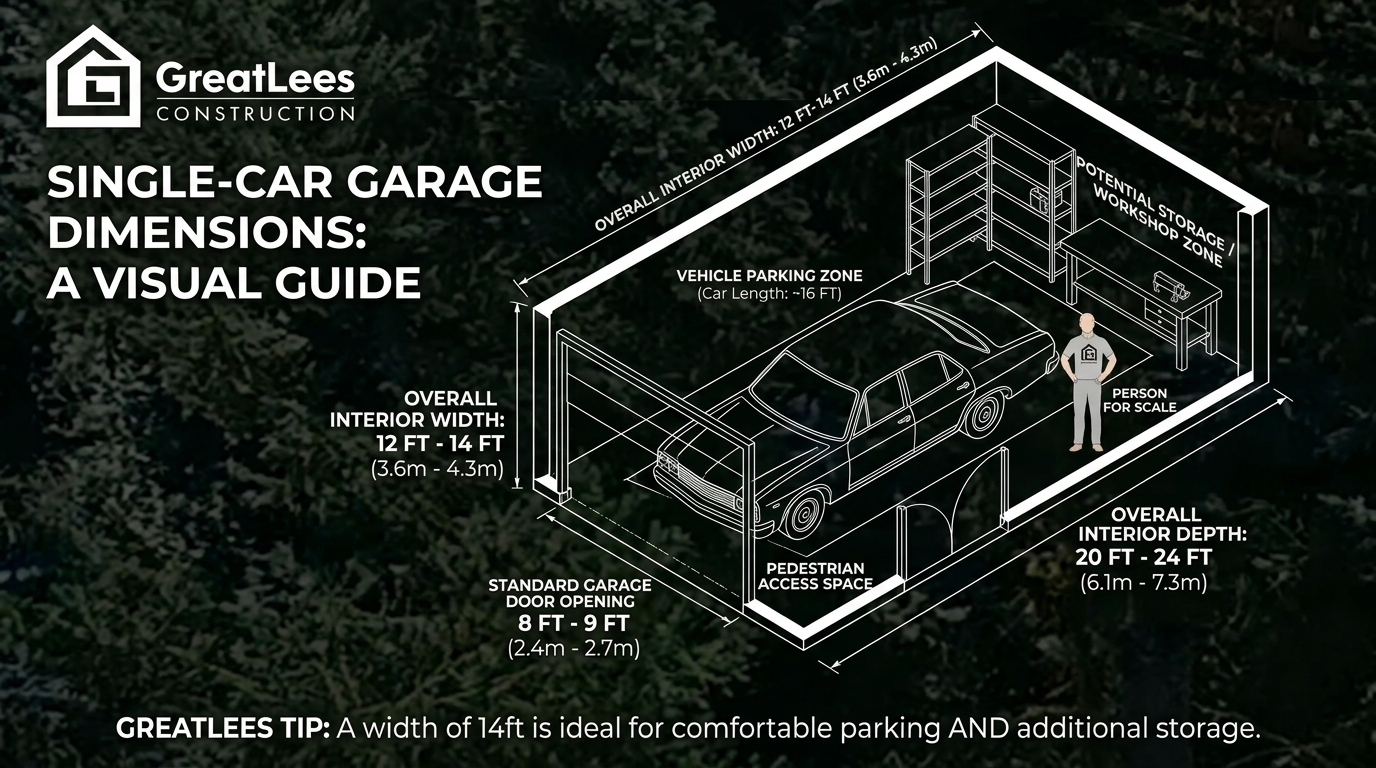
March 13, 2026
A single-car garage is designed to provide enough space for one vehicle while still allowing room for movement, storage, and basic functionality. Homeowners often rely on this type of garage for daily parking, protecting vehicles from the weather, and storing small tools or equipment. Understanding how big a single-car garage should be helps ensure that the space is practical, comfortable, and efficient for everyday use.
The size of a single-car garage can vary depending on the type of vehicle, storage needs, and building standards in a particular area. Some garages are built only for parking, while others include additional space for shelving, bicycles, or workbenches. Knowing the average dimensions and layout options makes it easier to plan or design a garage that meets your needs. In this guide, we will explore how big a single-car garage typically is and what factors influence its size.
The standard size of a single-car garage typically ranges between 12 and 16 feet in width and 20 and 24 feet in length. This size provides enough room to park one vehicle comfortably while leaving a small amount of space for walking around the car. Most residential builders follow these dimensions because they accommodate the majority of standard vehicles.
However, the exact measurements can vary depending on the design of the home and the type of vehicle the owner plans to store. A compact car requires less space, while larger sedans or SUVs may require a slightly wider garage. Planning the correct size helps prevent tight spaces and makes daily parking much easier.
The size of a single-car garage plays a major role in how functional and comfortable the space will be. A garage that is too small can make parking difficult and limit storage options. On the other hand, a well-planned garage allows enough space for movement and organization.
Another reason size matters is long-term usability. Homeowners often use their garages for more than parking, such as storing seasonal items or creating a small workspace. Choosing the right dimensions ensures that the garage remains useful for many years.
A garage’s width determines how easily a car can be parked and how much space remains on the sides. The most common width for a single-car garage ranges from 12 to 16 feet, depending on the design. Wider garages provide better accessibility and allow space for storage along the walls.
A narrow garage might technically fit a car, but it can feel cramped when opening doors or moving around the vehicle. For this reason, many modern homes prefer slightly wider garages. This extra space greatly improves convenience and functionality.
The minimum width usually starts around 12 feet. This allows a standard car to fit but leaves very little space for opening doors comfortably. Homeowners with compact vehicles may find this size workable but somewhat tight.
An ideal width is usually around 14 to 16 feet. This allows drivers to open doors more easily and move around the car without difficulty. It also provides a little room for shelves or storage units.
Some homeowners add extra width to include storage areas. This makes it easier to store bicycles, lawn equipment, or tools. A slightly larger garage can significantly improve organization.
Additional width also allows for wall-mounted shelving or cabinets. These storage solutions help keep the garage tidy. Organized storage ensures that the space remains practical without interfering with parking.
The length of a garage is just as important as the width because it determines whether the car fits comfortably from front to back. Most single-car garages are built between 20 and 24 feet long. This provides enough clearance for both the vehicle and the garage door.
Longer garages are particularly helpful for larger vehicles. SUVs and trucks often require additional space to prevent tight parking situations. A well-planned length also leaves room for storage at the front or back.
A minimum length of 20 feet usually fits most compact and mid-size vehicles. However, the space can feel tight when parking larger cars. Drivers may also have limited room for storage.
A length of 22 to 24 feet is generally considered more comfortable. It allows enough clearance for walking around the vehicle. This size also accommodates larger sedans or small SUVs.
Some garages include extra length to create a small workspace. This area can hold a workbench or tool cabinet. Having a dedicated work area adds flexibility to the garage.
Extra length can also be used for vertical storage racks or cabinets. These additions make the garage more organized. A longer garage can therefore serve multiple purposes.
Several factors influence how big a single-car garage should be. Vehicle size, storage needs, and building design all play a role in determining the ideal dimensions. Understanding these factors helps homeowners choose a garage size that works best for their situation.
Planning is important because modifying a garage later can be costly. Considering future needs during the design stage ensures the garage remains functional over time. A thoughtful layout can prevent many space-related problems.
Different vehicles require different amounts of space. Compact cars need less room, while SUVs or trucks require wider and longer garages. Planning for the largest vehicle ensures the garage remains usable.
Some homeowners store tools, bicycles, and seasonal equipment in their garages. These items require extra wall or floor space. Including storage in the design prevents clutter.
Garage door size also affects the overall design. Larger doors require more structural space and clearance. Proper planning ensures smooth operation.
The interior layout influences how efficiently the space is used. Shelves, cabinets, and workbenches should be considered during planning. A good layout maximizes functionality.
The square footage of a single-car garage depends on its length and width. Most standard garages range between 240 and 384 square feet. This amount of space is usually enough for one vehicle and minimal storage.
Larger garages provide additional flexibility for organization. Homeowners often choose slightly larger garages to accommodate future needs. Planning extra space can make the garage much more practical.
A 12 × 20 garage provides about 240 square feet of space. This is considered the smallest standard size. It mainly accommodates parking with limited storage.
A 14 × 22 garage offers about 308 square feet. This provides extra room around the vehicle. It allows space for shelving or small storage units.
A 16 × 24 garage offers around 384 square feet. This size allows comfortable parking and additional storage. It is often preferred for modern homes.
Some garages are designed to serve multiple purposes. They may include a small workshop or hobby area. Larger square footage supports these additional uses.
A properly sized single-car garage provides both convenience and protection for your vehicle. It ensures that parking is easy and reduces the risk of accidental scratches or dents. Adequate space also allows homeowners to organize tools and equipment efficiently.
Another advantage is improved property value. A well-designed garage is often considered an important feature in residential homes. Buyers appreciate garages that provide both parking and storage.
Even if the garage has limited space, smart design choices can make it feel more spacious. Organization and proper storage solutions can significantly improve usability. Many homeowners use vertical storage to maximize available space.
Lighting and layout also influence how open a garage feels. A clean and organized garage not only looks larger but also works more efficiently.
A single-car garage is an essential feature for many homes because it provides a secure and convenient place to park a vehicle. The typical dimensions usually range between 12 to 16 feet wide and 20 and 24 feet long, which provides enough space for one car and minimal storage. Understanding how big a single-car garage should be helps homeowners plan a space that is both practical and comfortable.
When designing a garage, it is important to consider vehicle size, storage needs, and future requirements. A slightly larger garage often provides greater flexibility and usability. By choosing the right dimensions, homeowners can ensure their garage remains functional for many years.
1. Can a single-car garage fit a truck?
Some trucks can fit in a single-car garage, but space may be tight. Larger trucks may require a wider or longer garage.
2. What is the smallest possible single-car garage size?
The smallest functional size is usually around 10 × 18 feet. However, this size offers very limited space for movement.
3. Is 12 × 20 enough for a single-car garage?
Yes, it can fit a standard vehicle. However, storage space will be minimal.
4. How tall is a typical single-car garage?
Most garages have a ceiling height of 8 to 10 feet. Taller ceilings allow for overhead storage.
5. Can a single-car garage be used as a workshop?
Yes, if the garage is large enough. Many homeowners add workbenches or tool cabinets.
6. What size garage door is used for a single-car garage?
Most single garage doors are about 8 to 9 feet wide. This size allows standard vehicles to enter easily.
7. Does adding storage change the required garage size?
Yes, storage requires additional wall or floor space. Planning storage during design helps avoid overcrowding.
8. Can a single-car garage fit two small cars?
In most cases, it cannot comfortably fit two vehicles. A two-car garage is recommended for multiple cars.
At Great Lees Construction, we design and build high-quality outdoor structures for homeowners across Ohio. Whether you need a durable garage, a practical storage shed, or a spacious barn, our team delivers expert craftsmanship and long-lasting materials.
Looking for strong and reliable garages? We build custom garages in Ohio that provide secure parking, extra storage, and long-term durability for your property.
Learn MoreNeed additional storage space? Our storage sheds in Ohio are perfect for tools, lawn equipment, and backyard organization while enhancing your property’s appearance.
Explore ShedsOur team specializes in building custom barns in Ohio designed for farming, livestock, equipment storage, and multi-purpose rural use.
View Barns
Veteran Owned & Operated Since 2017
4.1 Average Rating (31 Reviews)
17601 W 130th St Suite #4
North Royalton, OH 44133
Monday - Friday: 8:00 AM - 5:00PM